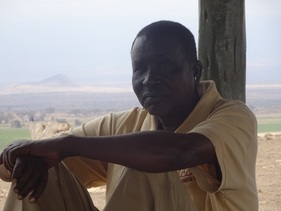
I flew an aerial count of the Amboseli basin on 30th July and did a ground survey with David Maitumo and Victor Mose on 14th August. The increase in wildlife in the last few months was astonishing. The herds are rapidly rebuilding to their pre-drought levels after being held down by predators in the years since the devastating losses of 2008. I counted some 330 buffalo, up from 160 after the drought and halfway back to the 600 level of 2009. The zebra population is continuing to climb steadily and wildebeest numbers have jumped since earlier this year. I suspect the increase is in part due to an influx from Tsavo or Tanzania this dry season.
The biggest surprise to me was the number of hippos. Once few and illusive, groups of ten or more are visible all along two large swamps and out on the banks sunning to the delight of park visitors. The highest number I’ve counted, around 100, was shortly before the 2008 drought when over 30 hippos died of starvation. Although I didn’t do a full count, I put their numbers now at 200. So what accounts for their increase?
The most likely reason is the rich matt of grasses that have sprung up across the swamps after the elephants chomped down the tall sedges. I watched a group of seven hippos half submerged in the swamp snatching at dense wads of forage in the middle of the day without having to budge.
Reedbuck are also more common in Amboseli than any time in decades, no doubt due to the same dense grazing lawns attracting other grazers.
This year is shaping up for drought around Amboseli if the short rains on October fail. With two months yet to go, the Maasai are worried about the ailing condition of their livestock. In contrast, Amboseli’s wildebeest and buffalo are in good condition and their calves are doing well, buffered by spreading swamp waters and a flush of new grass
I’m puzzled by the spreading swamps. I’ve seen them rise in dry spells before, but seldom as extensively. The rising water has flooded David Maitumo’s house and is eating away at the foundations, forcing him to evacuate furniture and equipment.
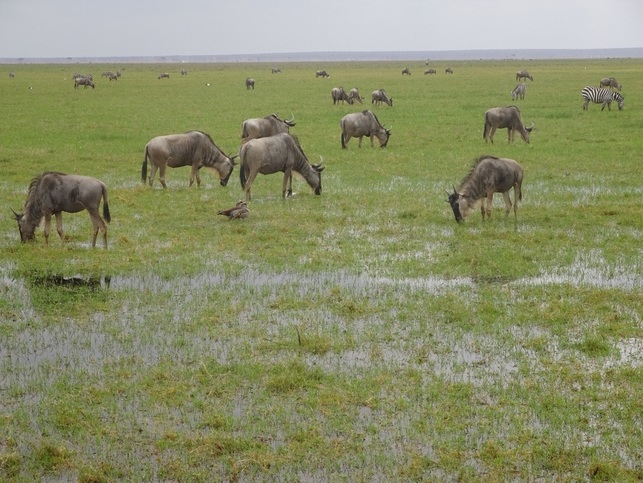
I flew an aerial count of the Amboseli basin on 30th July and did a ground survey with David Maitumo and Victor Mose on 14th August. The increase in wildlife in the last few months was astonishing. The herds are rapidly rebuilding to their pre-drought levels after being held down by predators in the years since the devastating losses of 2008. I counted some 330 buffalo, up from 160 after the drought and halfway back to the 600 level of 2009. The zebra population is continuing to climb steadily and wildebeest numbers have jumped since earlier this year. I suspect the increase is in part due to an influx from Tsavo or Tanzania this dry season.
The biggest surprise to me was the number of hippos. Once few and illusive, groups of ten or more are visible all along two large swamps and out on the banks sunning to the delight of park visitors. The highest number I’ve counted, around 100, was shortly before the 2008 drought when over 30 hippos died of starvation. Although I didn’t do a full count, I put their numbers now at 200. So what accounts for their increase?
The most likely reason is the rich matt of grasses that have sprung up across the swamps after the elephants chomped down the tall sedges. I watched a group of seven hippos half submerged in the swamp snatching at dense wads of forage in the middle of the day without having to budge.
Reedbuck are also more common in Amboseli than any time in decades, no doubt due to the same dense grazing lawns attracting other grazers.
This year is shaping up for drought around Amboseli if the short rains on October fail. With two months yet to go, the Maasai are worried about the ailing condition of their livestock. In contrast, Amboseli’s wildebeest and buffalo are in good condition and their calves are doing well, buffered by spreading swamp waters and a flush of new grass
I’m puzzled by the spreading swamps. I’ve seen them rise in dry spells before, but seldom as extensively. The rising water has flooded David Maitumo’s house and is eating away at the foundations, forcing him to evacuate furniture and equipment.
I flew an aerial count of the Amboseli basin on 30th July and did a ground survey with David Maitumo and Victor Mose on 14th August. The increase in wildlife in the last few months was astonishing. The herds are rapidly rebuilding to their pre-drought levels after being held down by predators in the years since the devastating losses of 2008. I counted some 330 buffalo, up from 160 after the drought and halfway back to the 600 level of 2009. The zebra population is continuing to climb steadily and wildebeest numbers have jumped since earlier this year. I suspect the increase is in part due to an influx from Tsavo or Tanzania this dry season.
The biggest surprise to me was the number of hippos. Once few and illusive, groups of ten or more are visible all along two large swamps and out on the banks sunning to the delight of park visitors. The highest number I’ve counted, around 100, was shortly before the 2008 drought when over 30 hippos died of starvation. Although I didn’t do a full count, I put their numbers now at 200. So what accounts for their increase?
The most likely reason is the rich matt of grasses that have sprung up across the swamps after the elephants chomped down the tall sedges. I watched a group of seven hippos half submerged in the swamp snatching at dense wads of forage in the middle of the day without having to budge.
Reedbuck are also more common in Amboseli than any time in decades, no doubt due to the same dense grazing lawns attracting other grazers.
This year is shaping up for drought around Amboseli if the short rains on October fail. With two months yet to go, the Maasai are worried about the ailing condition of their livestock. In contrast, Amboseli’s wildebeest and buffalo are in good condition and their calves are doing well, buffered by spreading swamp waters and a flush of new grass
I’m puzzled by the spreading swamps. I’ve seen them rise in dry spells before, but seldom as extensively. The rising water has flooded David Maitumo’s house and is eating away at the foundations, forcing him to evacuate furniture and equipment.
I flew an aerial count of the Amboseli basin on 30th July and did a ground survey with David Maitumo and Victor Mose on 14th August. The increase in wildlife in the last few months was astonishing. The herds are rapidly rebuilding to their pre-drought levels after being held down by predators in the years since the devastating losses of 2008. I counted some 330 buffalo, up from 160 after the drought and halfway back to the 600 level of 2009. The zebra population is continuing to climb steadily and wildebeest numbers have jumped since earlier this year. I suspect the increase is in part due to an influx from Tsavo or Tanzania this dry season.
The biggest surprise to me was the number of hippos. Once few and illusive, groups of ten or more are visible all along two large swamps and out on the banks sunning to the delight of park visitors. The highest number I’ve counted, around 100, was shortly before the 2008 drought when over 30 hippos died of starvation. Although I didn’t do a full count, I put their numbers now at 200. So what accounts for their increase?
The most likely reason is the rich matt of grasses that have sprung up across the swamps after the elephants chomped down the tall sedges. I watched a group of seven hippos half submerged in the swamp snatching at dense wads of forage in the middle of the day without having to budge.
Reedbuck are also more common in Amboseli than any time in decades, no doubt due to the same dense grazing lawns attracting other grazers.
This year is shaping up for drought around Amboseli if the short rains on October fail. With two months yet to go, the Maasai are worried about the ailing condition of their livestock. In contrast, Amboseli’s wildebeest and buffalo are in good condition and their calves are doing well, buffered by spreading swamp waters and a flush of new grass
I’m puzzled by the spreading swamps. I’ve seen them rise in dry spells before, but seldom as extensively. The rising water has flooded David Maitumo’s house and is eating away at the foundations, forcing him to evacuate furniture and equipment.