Surveys conducted across sections of the pastoral Maasai of Kenya show a wide variety of values for wildlife, ranging from utility and medicinal uses to environmental indicators, commerce, and tourism. Attitudes toward wildlife are highly variable, depending on perceived threats and uses. Large carnivores and herbivores pose the greatest threats to people, livestock, and crops, but also have many positive values. Attitudes vary with gender, age, education, and land holding, but most of all with the source of livelihood and location, which bears on relative abundance of useful and threatening species.
Traditional pastoral practices and cultural views that accommodated coexistence between livestock and wildlife are dwindling and being replaced by new values and sensibilities as pastoral practices give way to new livelihoods, lifestyles, and aspirations. Human-wildlife conflict has grown with the transition from mobile pastoralism to sedentary livelihoods. Unless the new values offset the loss of traditional values, wildlife will continue to decline. New wildlife-based livelihoods show that continued coexistence is possible despite the changes underway.
Full article available at https://link.springer.com/article/10.1007/s10745-019-0065-8
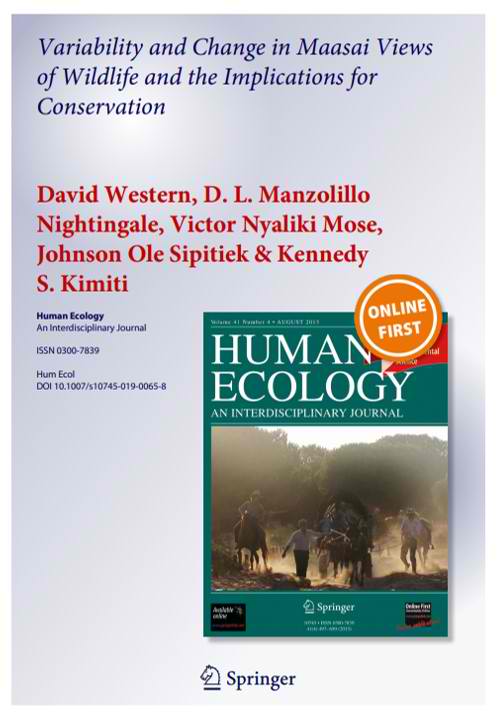
Surveys conducted across sections of the pastoral Maasai of Kenya show a wide variety of values for wildlife, ranging from utility and medicinal uses to environmental indicators, commerce, and tourism. Attitudes toward wildlife are highly variable, depending on perceived threats and uses. Large carnivores and herbivores pose the greatest threats to people, livestock, and crops, but also have many positive values. Attitudes vary with gender, age, education, and land holding, but most of all with the source of livelihood and location, which bears on relative abundance of useful and threatening species.
Traditional pastoral practices and cultural views that accommodated coexistence between livestock and wildlife are dwindling and being replaced by new values and sensibilities as pastoral practices give way to new livelihoods, lifestyles, and aspirations. Human-wildlife conflict has grown with the transition from mobile pastoralism to sedentary livelihoods. Unless the new values offset the loss of traditional values, wildlife will continue to decline. New wildlife-based livelihoods show that continued coexistence is possible despite the changes underway.
Full article available at https://link.springer.com/article/10.1007/s10745-019-0065-8