By Victor N. Mose, David Western and the ACP Team

Introduction
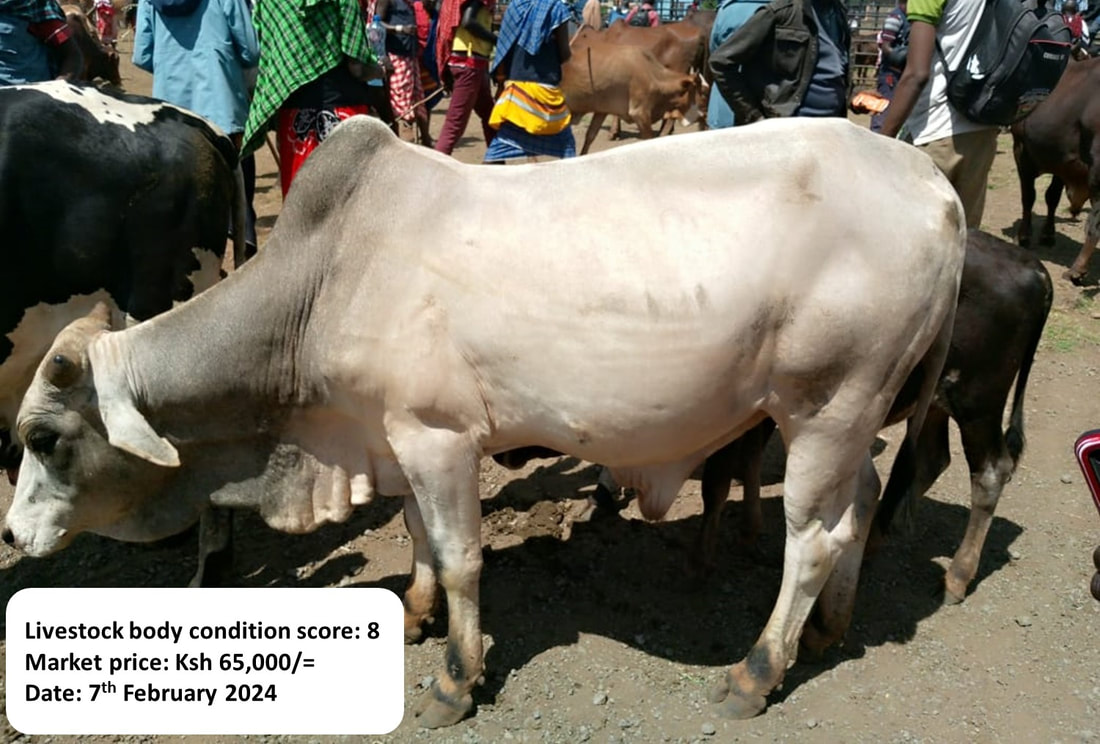
The effects of the good short rains have been felt in the Amboseli area in moving the pasture barometer into the green zone. The green zone signals abundant forage in the coming dry season. Body condition of wildlife and livestock has also fully recovered from the 2022-2023 drought. Milk yields have yet to bounce back due to impregnation and calving being delayed by over nine months following the drought. Wildebeest calving has also been delayed by a year because of the poor condition of animals at the end of the drought.
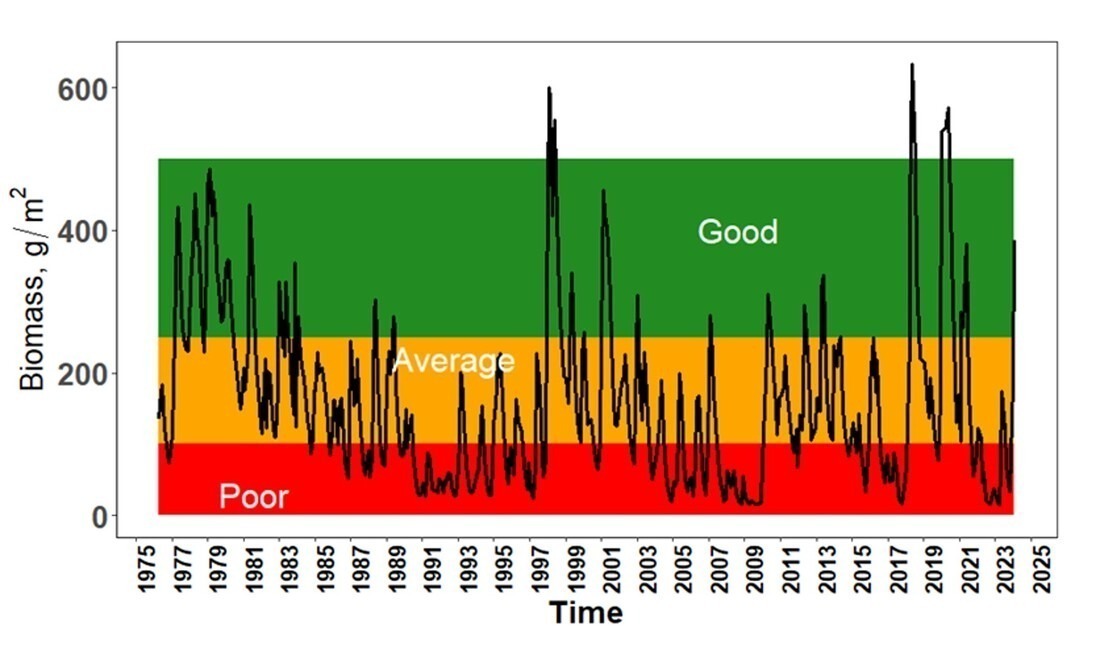
ACP’s long-term pasture barometer has now shifted to the green zone after the short rains that persisted into the new year.

By ACP Team

July 26, 2025

Our Amboseli Conservation Program Outlook Report gives the state of pastures, livestock, and wildlife health.

By Victor Mose

June 9, 2025

Horizontal learning, where local communities and scientists co-design research, remains a central pillar of Mosaic

By ACP Team

May 6, 2025

We are delighted to present the inaugural issue of Eseriani, a new magazine dedicated to exploring well-being

Current status of the Amboseli ecosystem and southern Kenya

Authored by : Victor N. Mose, David Western and the ACP Team
Posted on March 1, 2024

Introduction
The effects of the good short rains have been felt in the Amboseli area in moving the pasture barometer into the green zone. The green zone signals abundant forage in the coming dry season. Body condition of wildlife and livestock has also fully recovered from the 2022-2023 drought. Milk yields have yet to bounce back due to impregnation and calving being delayed by over nine months following the drought. Wildebeest calving has also been delayed by a year because of the poor condition of animals at the end of the drought.

ACP’s long-term pasture barometer has now shifted to the green zone after the short rains that persisted into the new year.

By Victor N. Mose, David Western and the ACP Team

Introduction
The effects of the good short rains have been felt in the Amboseli area in moving the pasture barometer into the green zone. The green zone signals abundant forage in the coming dry season. Body condition of wildlife and livestock has also fully recovered from the 2022-2023 drought. Milk yields have yet to bounce back due to impregnation and calving being delayed by over nine months following the drought. Wildebeest calving has also been delayed by a year because of the poor condition of animals at the end of the drought.

ACP’s long-term pasture barometer has now shifted to the green zone after the short rains that persisted into the new year.

By ACP Team

July 26, 2025

Our Amboseli Conservation Program Outlook Report gives the state of pastures, livestock, and wildlife health.

By Victor Mose

June 9, 2025

Horizontal learning, where local communities and scientists co-design research, remains a central pillar of Mosaic

By ACP Team

May 6, 2025

We are delighted to present the inaugural issue of Eseriani, a new magazine dedicated to exploring well-being

Posted on March 1, 2024

By Victor N. Mose, David Western and the ACP Team

Introduction
The effects of the good short rains have been felt in the Amboseli area in moving the pasture barometer into the green zone. The green zone signals abundant forage in the coming dry season. Body condition of wildlife and livestock has also fully recovered from the 2022-2023 drought. Milk yields have yet to bounce back due to impregnation and calving being delayed by over nine months following the drought. Wildebeest calving has also been delayed by a year because of the poor condition of animals at the end of the drought.

ACP’s long-term pasture barometer has now shifted to the green zone after the short rains that persisted into the new year.

Recent Posts

By David Western

November 27, 2025

The handing back of Amboseli National Park to Kajiado County management on 8th November 2025

By ACP Team

July 26, 2025

Our Amboseli Conservation Program Outlook Report gives the state of pastures, livestock, and wildlife health.

By Victor Mose

June 9, 2025

Horizontal learning, where local communities and scientists co-design research, remains a central pillar of Mosaic

By ACP Team

May 6, 2025

We are delighted to present the inaugural issue of Eseriani, a new magazine dedicated to exploring well-being

By David Western, David Maitumo, Victor N. Mose, Julius Muriuki and Glen P. Mitema

March 14, 2025

Amboseli became world renowned in the 1950s as the setting for Where No Vulture’s Fly

By David Western, Victor N. Mose, David Maitumo, Immaculate Ombongi, Sakimba Kimiti, Winfridah Kemunto, Samuel Lekanaiya, Paul Kasaine and Sunte Kimiti

February 7, 2025

The outlook for livestock and wildlife in the short dry season normally stretching from January to the long rains

By Victor N. Mose

January 28, 2025

ACP, ACC, and NAU launched a NASA-funded One Health survey using GEDI and local monitoring for ecosystem health.

By David Western, Victor N. Mose, David Maitumo, Immaculate Ombongi, Sakimba Kimiti, Winfridah Kemunto, Samuel Lekanaiya, Paul Kasaine and Sunte Kimiti

November 30, 2024

The heavy prolonged El Niño rains boosted pastures across the Amboseli ecosystem

By David Western, Immaculate Ombongi and Victor N. Mose

November 30, 2024

Our study traces the transition from traditional livestock practices based on seasonal migrations to permanent

By Victor N. Mose, PhD, ACC/ACP, Nairobi, Kenya.

November 17, 2024

The MOSAIC field mission to the Amazon region, following a previous mission to East Africa

Contact Us

Amboseli Conservation Program
P.O Box 15289-00509 or 62844-00200
Nairobi, Kenya.

Tel/Fax: +254 20 891360 / 891751
Email: acc@acc.or.ke