In less than three years, Kenyan universities will begin receiving the first groups of students under the Competency Based Education (CBE) system, which emphasises practical application of knowledge, critical thinking, problem solving, communication and collaboration. Against this backdrop, a recent learning exchange at Jomo Kenyatta University of Agriculture and Technology (JKUAT) brought together pastoralists and academia to share knowledge and experiences on the interconnectedness of human, animal and environmental health.
Herders from Amboseli, who are members of a community One Health Club, visited JKUAT for the exchange, where they interacted with biostatistics students, lecturers, medical professionals and veterinary specialists. The discussions focused on practical issues affecting pastoral communities, including the use of traditional medicine in the treatment of people and livestock.
The exchange was complemented by a locally designed board game known as Nyasi, which simulates some of the decisions herders make in their daily management of livestock. Players must choose where to graze and water their animals while observing the rules established by grazing committees and responding to changing weather and environmental conditions. Herders’ decisions are influenced by seasonal changes, the availability of pasture and water, livestock conditions and household needs, all of which affect livestock management and household livelihoods.
Students participating in the exercise took on the roles of herders and navigated a simulated landscape, making decisions that affected the size of their herds, represented by pieces on the game board. The game also introduced situations involving competition and conflict over resources, requiring players to negotiate and reach settlements in accordance with agreed rules.
As the game progressed, participating herders explained the reasoning behind their decisions and related them to their own experiences. This allowed students to see how choices about grazing, water and livestock movement are influenced by a combination of environmental conditions, household needs and communal rules. The players also considered the consequences of their decisions under extreme conditions such as drought and floods.
The activities, framed within the One Health approach, highlighted the range of challenges faced by pastoral communities. These include livestock diseases, human wildlife interactions, land degradation, grazing pressure and economic shocks associated with livestock sales.
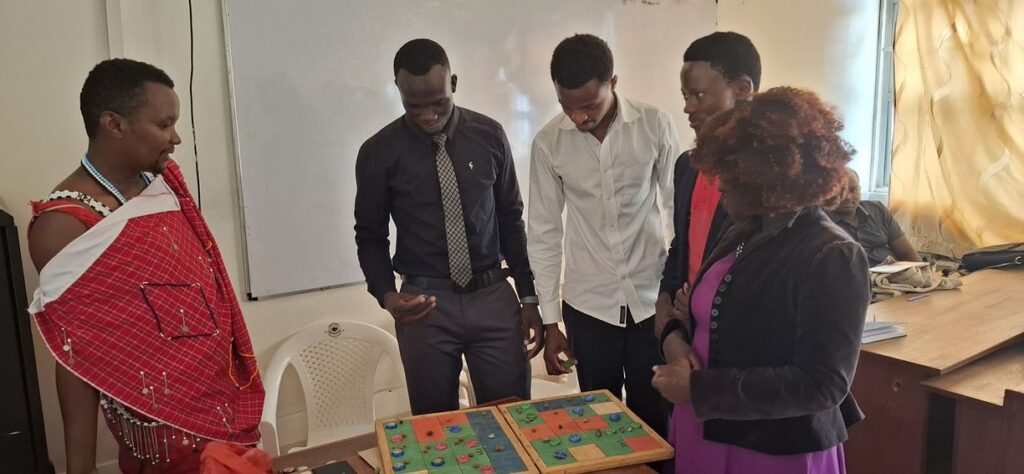
The exchange brought community experience into the university classroom, where students explored pastoral realities through the Nyasi game. The community members involved in the exchange are promoting the One Health approach in Amboseli and neighbouring cross-border ecosystems in northern Tanzania, with the aim of strengthening practical and integrated approaches to environmental management.
Engagement with universities and research institutions forms part of these efforts to connect community knowledge with academic learning and research.
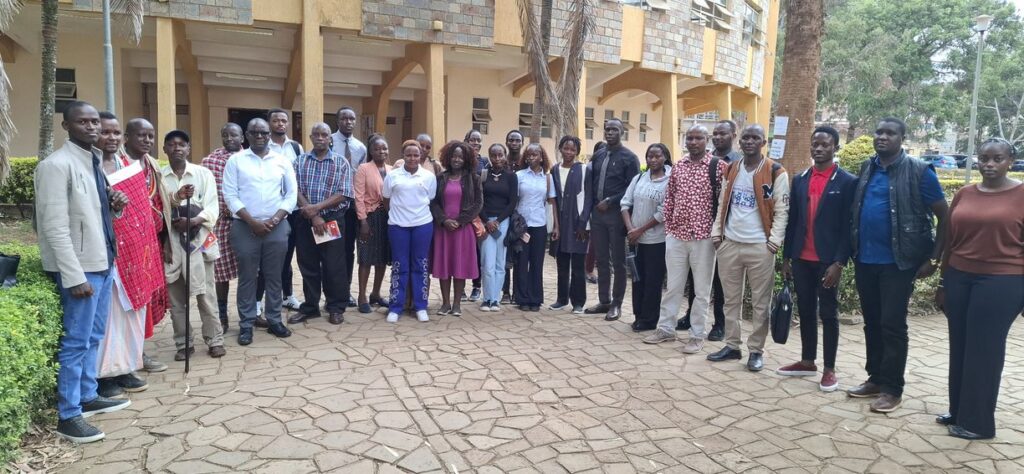
As universities prepare for the introduction of CBE, such exchanges can form part of the interaction between institutions of higher learning, communities and other stakeholders.
Following the exchange, partners in the MOSAIC project, together with the herders and students, will jointly develop an open-source digital version of the Nyasi game. This effort will further support learning and engagement on pastoral decision-making and ecosystem management.
The digital version of the game will build on the experiences and knowledge shared during the exchange, creating an interactive platform for continued learning and collaboration.
In less than three years, Kenyan universities will begin receiving the first groups of students under the Competency Based Education (CBE) system, which emphasises practical application of knowledge, critical thinking, problem solving, communication and collaboration. Against this backdrop, a recent learning exchange at Jomo Kenyatta University of Agriculture and Technology (JKUAT) brought together pastoralists and academia to share knowledge and experiences on the interconnectedness of human, animal and environmental health.
Herders from Amboseli, who are members of a community One Health Club, visited JKUAT for the exchange, where they interacted with biostatistics students, lecturers, medical professionals and veterinary specialists. The discussions focused on practical issues affecting pastoral communities, including the use of traditional medicine in the treatment of people and livestock.
The exchange was complemented by a locally designed board game known as Nyasi, which simulates some of the decisions herders make in their daily management of livestock. Players must choose where to graze and water their animals while observing the rules established by grazing committees and responding to changing weather and environmental conditions. Herders’ decisions are influenced by seasonal changes, the availability of pasture and water, livestock conditions and household needs, all of which affect livestock management and household livelihoods.
Students participating in the exercise took on the roles of herders and navigated a simulated landscape, making decisions that affected the size of their herds, represented by pieces on the game board. The game also introduced situations involving competition and conflict over resources, requiring players to negotiate and reach settlements in accordance with agreed rules.
As the game progressed, participating herders explained the reasoning behind their decisions and related them to their own experiences. This allowed students to see how choices about grazing, water and livestock movement are influenced by a combination of environmental conditions, household needs and communal rules. The players also considered the consequences of their decisions under extreme conditions such as drought and floods.
The activities, framed within the One Health approach, highlighted the range of challenges faced by pastoral communities. These include livestock diseases, human wildlife interactions, land degradation, grazing pressure and economic shocks associated with livestock sales.
The exchange brought community experience into the university classroom, where students explored pastoral realities through the Nyasi game. The community members involved in the exchange are promoting the One Health approach in Amboseli and neighbouring cross-border ecosystems in northern Tanzania, with the aim of strengthening practical and integrated approaches to environmental management.
Engagement with universities and research institutions forms part of these efforts to connect community knowledge with academic learning and research.
As universities prepare for the introduction of CBE, such exchanges can form part of the interaction between institutions of higher learning, communities and other stakeholders.
Following the exchange, partners in the MOSAIC project, together with the herders and students, will jointly develop an open-source digital version of the Nyasi game. This effort will further support learning and engagement on pastoral decision-making and ecosystem management.
The digital version of the game will build on the experiences and knowledge shared during the exchange, creating an interactive platform for continued learning and collaboration.
In less than three years, Kenyan universities will begin receiving the first groups of students under the Competency Based Education (CBE) system, which emphasises practical application of knowledge, critical thinking, problem solving, communication and collaboration. Against this backdrop, a recent learning exchange at Jomo Kenyatta University of Agriculture and Technology (JKUAT) brought together pastoralists and academia to share knowledge and experiences on the interconnectedness of human, animal and environmental health.
Herders from Amboseli, who are members of a community One Health Club, visited JKUAT for the exchange, where they interacted with biostatistics students, lecturers, medical professionals and veterinary specialists. The discussions focused on practical issues affecting pastoral communities, including the use of traditional medicine in the treatment of people and livestock.
The exchange was complemented by a locally designed board game known as Nyasi, which simulates some of the decisions herders make in their daily management of livestock. Players must choose where to graze and water their animals while observing the rules established by grazing committees and responding to changing weather and environmental conditions. Herders’ decisions are influenced by seasonal changes, the availability of pasture and water, livestock conditions and household needs, all of which affect livestock management and household livelihoods.
Students participating in the exercise took on the roles of herders and navigated a simulated landscape, making decisions that affected the size of their herds, represented by pieces on the game board. The game also introduced situations involving competition and conflict over resources, requiring players to negotiate and reach settlements in accordance with agreed rules.
As the game progressed, participating herders explained the reasoning behind their decisions and related them to their own experiences. This allowed students to see how choices about grazing, water and livestock movement are influenced by a combination of environmental conditions, household needs and communal rules. The players also considered the consequences of their decisions under extreme conditions such as drought and floods.
The activities, framed within the One Health approach, highlighted the range of challenges faced by pastoral communities. These include livestock diseases, human wildlife interactions, land degradation, grazing pressure and economic shocks associated with livestock sales.
The exchange brought community experience into the university classroom, where students explored pastoral realities through the Nyasi game. The community members involved in the exchange are promoting the One Health approach in Amboseli and neighbouring cross-border ecosystems in northern Tanzania, with the aim of strengthening practical and integrated approaches to environmental management.
Engagement with universities and research institutions forms part of these efforts to connect community knowledge with academic learning and research.
As universities prepare for the introduction of CBE, such exchanges can form part of the interaction between institutions of higher learning, communities and other stakeholders.
Following the exchange, partners in the MOSAIC project, together with the herders and students, will jointly develop an open-source digital version of the Nyasi game. This effort will further support learning and engagement on pastoral decision-making and ecosystem management.
The digital version of the game will build on the experiences and knowledge shared during the exchange, creating an interactive platform for continued learning and collaboration.
In less than three years, Kenyan universities will begin receiving the first groups of students under the Competency Based Education (CBE) system, which emphasises practical application of knowledge, critical thinking, problem solving, communication and collaboration. Against this backdrop, a recent learning exchange at Jomo Kenyatta University of Agriculture and Technology (JKUAT) brought together pastoralists and academia to share knowledge and experiences on the interconnectedness of human, animal and environmental health.
Herders from Amboseli, who are members of a community One Health Club, visited JKUAT for the exchange, where they interacted with biostatistics students, lecturers, medical professionals and veterinary specialists. The discussions focused on practical issues affecting pastoral communities, including the use of traditional medicine in the treatment of people and livestock.
The exchange was complemented by a locally designed board game known as Nyasi, which simulates some of the decisions herders make in their daily management of livestock. Players must choose where to graze and water their animals while observing the rules established by grazing committees and responding to changing weather and environmental conditions. Herders’ decisions are influenced by seasonal changes, the availability of pasture and water, livestock conditions and household needs, all of which affect livestock management and household livelihoods.
Students participating in the exercise took on the roles of herders and navigated a simulated landscape, making decisions that affected the size of their herds, represented by pieces on the game board. The game also introduced situations involving competition and conflict over resources, requiring players to negotiate and reach settlements in accordance with agreed rules.
As the game progressed, participating herders explained the reasoning behind their decisions and related them to their own experiences. This allowed students to see how choices about grazing, water and livestock movement are influenced by a combination of environmental conditions, household needs and communal rules. The players also considered the consequences of their decisions under extreme conditions such as drought and floods.
The activities, framed within the One Health approach, highlighted the range of challenges faced by pastoral communities. These include livestock diseases, human wildlife interactions, land degradation, grazing pressure and economic shocks associated with livestock sales.
The exchange brought community experience into the university classroom, where students explored pastoral realities through the Nyasi game. The community members involved in the exchange are promoting the One Health approach in Amboseli and neighbouring cross-border ecosystems in northern Tanzania, with the aim of strengthening practical and integrated approaches to environmental management.
Engagement with universities and research institutions forms part of these efforts to connect community knowledge with academic learning and research.
As universities prepare for the introduction of CBE, such exchanges can form part of the interaction between institutions of higher learning, communities and other stakeholders.
Following the exchange, partners in the MOSAIC project, together with the herders and students, will jointly develop an open-source digital version of the Nyasi game. This effort will further support learning and engagement on pastoral decision-making and ecosystem management.
The digital version of the game will build on the experiences and knowledge shared during the exchange, creating an interactive platform for continued learning and collaboration.