Ecotourism Kenya celebrated its 30th anniversary at festive gala held at the Hyatt Regency on 16th of October. As chairperson Angela Njihela put it, “As Ecotourism Kenya celebrates 30 years, we celebrate more than an institution; we celebrate a movement that has helped shape the understanding and practice of responsible tourism in Kenya”.
The ecotourism movement took shape in the early 1970s when Kenya was “discovered” as a wildlife haven. With the advent of cheap long-haul flights, Kenya became the wildlife mecca of Africa. All too soon though, the tourism boom saw minibuses crowding out lions and cheetahs and destroying the Kenya’s natural appeal.
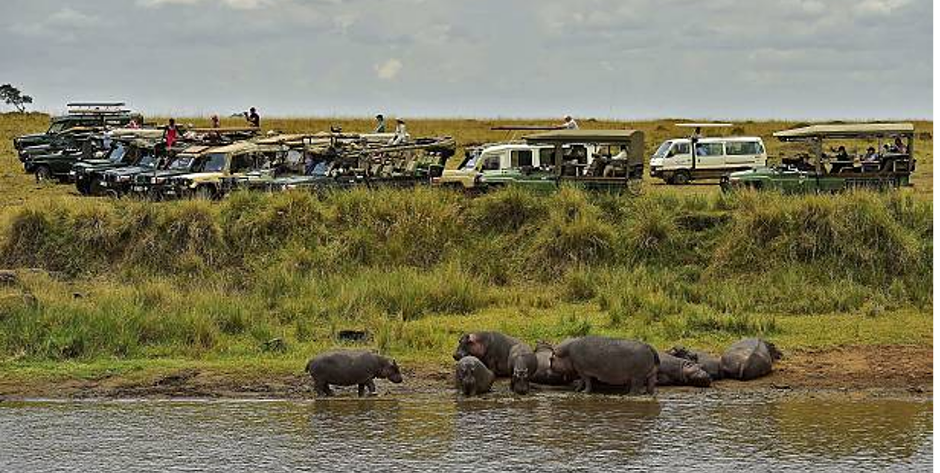
The challenge of turning Kenya’s tourism overcrowding into sustainable tourism.
The same story was repeated around the world wherever wild places opened up to mass tourism. This raised a pressing question: how can tourism become a positive force for conserving natural areas and the communities who sustain them?
Amboseli took center stage in the search for solutions in the PBS documentary, The Environmental Tourist, produced by Megan Epler Wood in 1991. The first of its kind to search for a more responsible and sustainable tourism, Megan and I went on to form The International Ecotourism Society (TIES) that same year. In 1993 we produced Ecotourism. A Guide for Planners and Managers laying out the principles for sustainable tourism.
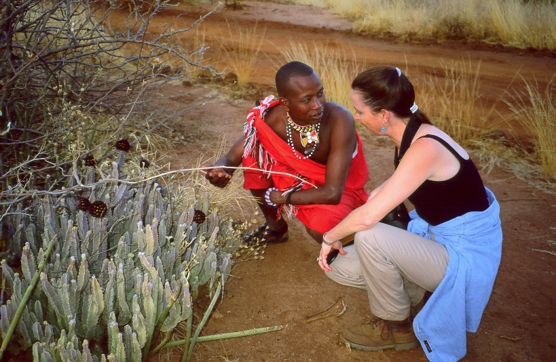
Ecotourism promotes sustainable tourism which conserves natural places to the benefit of local communities.
TIES launched an international movement promoting ecotourism principles. Australia took the lead in setting up its own ecotourism societies. Kenya followed when the African Conservation Centre convened and launched the Ecotourism Society of Kenya, now simply Ecotourism Kenya. The remarkable success of Ecotourism Kenya in transforming the image and practices for sustainable tourism can be found on its website.
I was privileged to be invited as the guest of honor at the Ecotourism Kenya’s 30th anniversary to reflect on our long ecotourism journey and its future. Here are my brief reflections produced in EK’s 30th anniversary brochure.
The massed mini-buses jostling to snap pictures of encircled lions once cast Kenya as the ugly face of tourism. Worse, Kenya’s tourist capacity hinged on how many lion prides we had, and how many mini buses tourists and lions could tolerate.
I launched studies of tourism behavior in Amboseli in 1973, and through the African Conservation Centre, in Maasai Mara in 1992. The results were damning. Tourists spent eighty percent of their time viewing the Big Five, thwarted lion and cheetah hunts, damaged vegetation and were avoiding our overcrowded parks. Our studies advocated a new direction for tourism. Give tourists a richer wildlife experience with well-trained guides, and visitors and wildlife alike will win out.
A grave gap in Kenya’s tourism policies lay in ignoring local communities supporting most of its wildlife. Once Kenya began promoting community-based conservation, a new vision of tourism, ecotourism, was born. Ecotourism engages communities, wins space for wildlife, enriches visitor experiences, and promotes ecologically sustainable practices.
Ecotourism Kenya was launched to promote Kenya’s new vision of sustainable tourism. Thirty-years on, its efforts have turned Kenya’s once-tarnished image into a world-renowned ecotourism pioneer. Wildlife conservancies run by local communities now far exceed the area of our national parks and secure wildlife with the support of community rangers.
I encourage Ecotourism Kenya to set our vision for the next 30 years. Promote many images of Kenya—our grand landscapes, human prehistory, recreation, culture—in order to make the ecotourism experience richer for Kenyans and visitors alike, and a durable plank of Kenya’s future.

Ecotourism Kenya celebrated its 30th anniversary at festive gala held at the Hyatt Regency on 16th of October. As chairperson Angela Njihela put it, “As Ecotourism Kenya celebrates 30 years, we celebrate more than an institution; we celebrate a movement that has helped shape the understanding and practice of responsible tourism in Kenya”.
The ecotourism movement took shape in the early 1970s when Kenya was “discovered” as a wildlife haven. With the advent of cheap long-haul flights, Kenya became the wildlife mecca of Africa. All too soon though, the tourism boom saw minibuses crowding out lions and cheetahs and destroying the Kenya’s natural appeal.
The challenge of turning Kenya’s tourism overcrowding into sustainable tourism.
The same story was repeated around the world wherever wild places opened up to mass tourism. This raised a pressing question: how can tourism become a positive force for conserving natural areas and the communities who sustain them?
Amboseli took center stage in the search for solutions in the PBS documentary, The Environmental Tourist, produced by Megan Epler Wood in 1991. The first of its kind to search for a more responsible and sustainable tourism, Megan and I went on to form The International Ecotourism Society (TIES) that same year. In 1993 we produced Ecotourism. A Guide for Planners and Managers laying out the principles for sustainable tourism.
Ecotourism promotes sustainable tourism which conserves natural places to the benefit of local communities.
TIES launched an international movement promoting ecotourism principles. Australia took the lead in setting up its own ecotourism societies. Kenya followed when the African Conservation Centre convened and launched the Ecotourism Society of Kenya, now simply Ecotourism Kenya. The remarkable success of Ecotourism Kenya in transforming the image and practices for sustainable tourism can be found on its website.
I was privileged to be invited as the guest of honor at the Ecotourism Kenya’s 30th anniversary to reflect on our long ecotourism journey and its future. Here are my brief reflections produced in EK’s 30th anniversary brochure.
The massed mini-buses jostling to snap pictures of encircled lions once cast Kenya as the ugly face of tourism. Worse, Kenya’s tourist capacity hinged on how many lion prides we had, and how many mini buses tourists and lions could tolerate.
I launched studies of tourism behavior in Amboseli in 1973, and through the African Conservation Centre, in Maasai Mara in 1992. The results were damning. Tourists spent eighty percent of their time viewing the Big Five, thwarted lion and cheetah hunts, damaged vegetation and were avoiding our overcrowded parks. Our studies advocated a new direction for tourism. Give tourists a richer wildlife experience with well-trained guides, and visitors and wildlife alike will win out.
A grave gap in Kenya’s tourism policies lay in ignoring local communities supporting most of its wildlife. Once Kenya began promoting community-based conservation, a new vision of tourism, ecotourism, was born. Ecotourism engages communities, wins space for wildlife, enriches visitor experiences, and promotes ecologically sustainable practices.
Ecotourism Kenya was launched to promote Kenya’s new vision of sustainable tourism. Thirty-years on, its efforts have turned Kenya’s once-tarnished image into a world-renowned ecotourism pioneer. Wildlife conservancies run by local communities now far exceed the area of our national parks and secure wildlife with the support of community rangers.
I encourage Ecotourism Kenya to set our vision for the next 30 years. Promote many images of Kenya—our grand landscapes, human prehistory, recreation, culture—in order to make the ecotourism experience richer for Kenyans and visitors alike, and a durable plank of Kenya’s future.