Horizontal learning, where local communities and scientists co-design research, remains a central pillar of Project MOSAIC (Multi site Application of Open Science in the Creation of Healthy Environments Involving Local Communities). This approach spans Work Packages 1, 2, and 5.
The East African MOSAIC team, led by the African Conservation Centre and the Amboseli Conservation Program, organized a horizontal learning workshop under the theme “Open Science Involving Local Communities” and titled “Weather and Climate Extreme Events Preparedness.”
The workshop was hosted by Masinde Muliro University of Science and Technology (MMUST) through its School of Disaster Management and Humanitarian Assistance (SDMHA). It brought together local Maasai herders—who also serve as resource assessors in the MOSAIC project—from their savanna homelands to the forest ecosystem of western Kenya.
Held from May 27 to 30, 2025, the four-day event aimed to strengthen the university’s research and practical capacity to address climate-related disasters by involving local communities in designing preparedness and mitigation strategies.
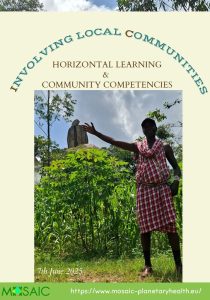 The workshop created a strong platform for knowledge exchange between university researchers and Maasai herders. Participants explored open science tools to track weather patterns in real time and to model predictions of climate extremes for use in local settings.
“Learning about satellite tools like Google Earth Engine and their ability to visualize pasture greenness will help me and other herders track areas of green vegetation during periods of extreme shortage caused by droughts”
— Paul Kasaine
Discussions also focused on developing short courses for community members without technical backgrounds, helping to recognize and integrate local knowledge into formal disaster preparedness and response planning.
The event highlighted the value of research that genuinely includes communities and encouraged participants to continue building collaborative approaches.
Download full workshop report below.
👉 [Click here to download]
Horizontal learning, where local communities and scientists co-design research, remains a central pillar of Project MOSAIC (Multi site Application of Open Science in the Creation of Healthy Environments Involving Local Communities). This approach spans Work Packages 1, 2, and 5.
The East African MOSAIC team, led by the African Conservation Centre and the Amboseli Conservation Program, organized a horizontal learning workshop under the theme “Open Science Involving Local Communities” and titled “Weather and Climate Extreme Events Preparedness.”
The workshop was hosted by Masinde Muliro University of Science and Technology (MMUST) through its School of Disaster Management and Humanitarian Assistance (SDMHA). It brought together local Maasai herders—who also serve as resource assessors in the MOSAIC project—from their savanna homelands to the forest ecosystem of western Kenya.
Held from May 27 to 30, 2025, the four-day event aimed to strengthen the university’s research and practical capacity to address climate-related disasters by involving local communities in designing preparedness and mitigation strategies.
The workshop created a strong platform for knowledge exchange between university researchers and Maasai herders. Participants explored open science tools to track weather patterns in real time and to model predictions of climate extremes for use in local settings.
“Learning about satellite tools like Google Earth Engine and their ability to visualize pasture greenness will help me and other herders track areas of green vegetation during periods of extreme shortage caused by droughts”
— Paul Kasaine
Discussions also focused on developing short courses for community members without technical backgrounds, helping to recognize and integrate local knowledge into formal disaster preparedness and response planning.
The event highlighted the value of research that genuinely includes communities and encouraged participants to continue building collaborative approaches.
Download full workshop report below.
👉 [Click here to download]
Horizontal learning, where local communities and scientists co-design research, remains a central pillar of Project MOSAIC (Multi site Application of Open Science in the Creation of Healthy Environments Involving Local Communities). This approach spans Work Packages 1, 2, and 5.
The East African MOSAIC team, led by the African Conservation Centre and the Amboseli Conservation Program, organized a horizontal learning workshop under the theme “Open Science Involving Local Communities” and titled “Weather and Climate Extreme Events Preparedness.”
The workshop was hosted by Masinde Muliro University of Science and Technology (MMUST) through its School of Disaster Management and Humanitarian Assistance (SDMHA). It brought together local Maasai herders—who also serve as resource assessors in the MOSAIC project—from their savanna homelands to the forest ecosystem of western Kenya.
Held from May 27 to 30, 2025, the four-day event aimed to strengthen the university’s research and practical capacity to address climate-related disasters by involving local communities in designing preparedness and mitigation strategies.
The workshop created a strong platform for knowledge exchange between university researchers and Maasai herders. Participants explored open science tools to track weather patterns in real time and to model predictions of climate extremes for use in local settings.
“Learning about satellite tools like Google Earth Engine and their ability to visualize pasture greenness will help me and other herders track areas of green vegetation during periods of extreme shortage caused by droughts”
— Paul Kasaine
Discussions also focused on developing short courses for community members without technical backgrounds, helping to recognize and integrate local knowledge into formal disaster preparedness and response planning.
The event highlighted the value of research that genuinely includes communities and encouraged participants to continue building collaborative approaches.
Download full workshop report below.
👉 [Click here to download]
Horizontal learning, where local communities and scientists co-design research, remains a central pillar of Project MOSAIC (Multi site Application of Open Science in the Creation of Healthy Environments Involving Local Communities). This approach spans Work Packages 1, 2, and 5.
The East African MOSAIC team, led by the African Conservation Centre and the Amboseli Conservation Program, organized a horizontal learning workshop under the theme “Open Science Involving Local Communities” and titled “Weather and Climate Extreme Events Preparedness.”
The workshop was hosted by Masinde Muliro University of Science and Technology (MMUST) through its School of Disaster Management and Humanitarian Assistance (SDMHA). It brought together local Maasai herders—who also serve as resource assessors in the MOSAIC project—from their savanna homelands to the forest ecosystem of western Kenya.
Held from May 27 to 30, 2025, the four-day event aimed to strengthen the university’s research and practical capacity to address climate-related disasters by involving local communities in designing preparedness and mitigation strategies.
The workshop created a strong platform for knowledge exchange between university researchers and Maasai herders. Participants explored open science tools to track weather patterns in real time and to model predictions of climate extremes for use in local settings.
“Learning about satellite tools like Google Earth Engine and their ability to visualize pasture greenness will help me and other herders track areas of green vegetation during periods of extreme shortage caused by droughts”
— Paul Kasaine
Discussions also focused on developing short courses for community members without technical backgrounds, helping to recognize and integrate local knowledge into formal disaster preparedness and response planning.
The event highlighted the value of research that genuinely includes communities and encouraged participants to continue building collaborative approaches.
Download full workshop report below.
👉 [Click here to download]