Preamble
The heavy prolonged El Niño rains boosted pastures across the Amboseli ecosystem to peak growth in May, with the exception of slightly weaker rains on Mbirikani. The rich pastures fully restored the loss of body condition livestock and wildlife suffered in the 2022-2023 drought. Milk yields also recovered from the year-long delay caused by the drought. Market prices for livestock hit an all-time high due to cattle shortages, rising national beef demand, pastoralists rebuilding their herds, and inflation.
The Outlook
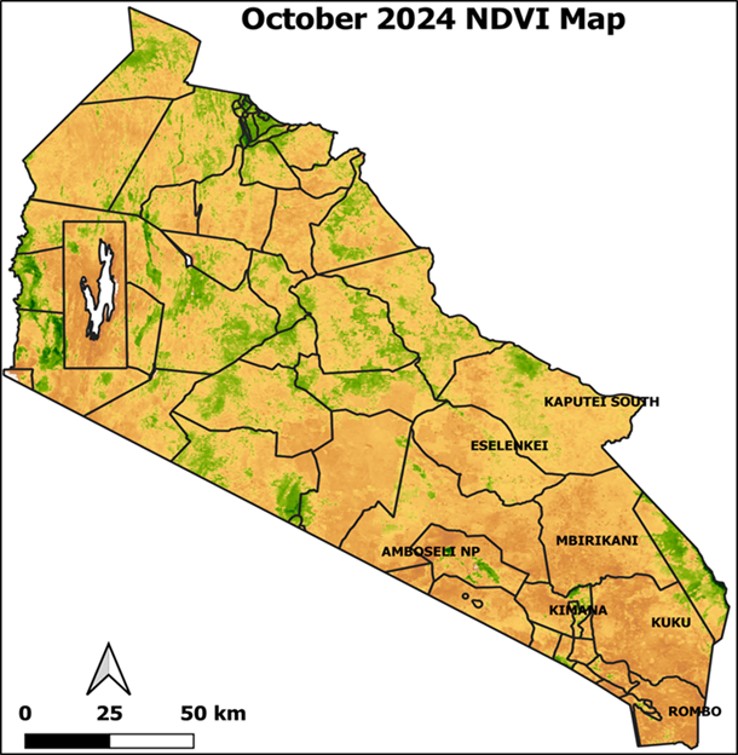
The heavy and prolonged El Niño rains boosted pastures across the Amboseli ecosystem to peak growth in May, except for poorer rains on Mbirikani. The rich pastures fully restored the depleted body conditions of livestock and wildlife
suffered in the 2022-2023 drought. Milk yields also recovered from the year-long delay caused by the drought. Market prices for livestock hit an all-time high due to cattle shortages, rising national beef demand, pastoralists rebuilding their
herds, and inflation.
The post-drought recovery captured in all our key rangelands indicators, coupled with the surplus pastures left by the prolonged rains, spells good outlook for Amboseli through the end of the year. Less clear is the outlook for the short rains at the end of 2024. Originally projected by the Met Department to be poor due to the El Niño cool phase typically following in the La Niña cooling phase, the forecasts are now less clear. Warming
seas and atmospheric temperatures are changing climatic patterns globally, creating greater weather extremes which complicate weather forecasts.
The unpredictable weather patterns make it all the more important to assess the outlook for Amboseli based on actual conditions.
Download the full outlook report below.
Amboseli_outlook_report_26th_nov_2024
Preamble
The heavy prolonged El Niño rains boosted pastures across the Amboseli ecosystem to peak growth in May, with the exception of slightly weaker rains on Mbirikani. The rich pastures fully restored the loss of body condition livestock and wildlife suffered in the 2022-2023 drought. Milk yields also recovered from the year-long delay caused by the drought. Market prices for livestock hit an all-time high due to cattle shortages, rising national beef demand, pastoralists rebuilding their herds, and inflation.
The Outlook
The heavy and prolonged El Niño rains boosted pastures across the Amboseli ecosystem to peak growth in May, except for poorer rains on Mbirikani. The rich pastures fully restored the depleted body conditions of livestock and wildlife
suffered in the 2022-2023 drought. Milk yields also recovered from the year-long delay caused by the drought. Market prices for livestock hit an all-time high due to cattle shortages, rising national beef demand, pastoralists rebuilding their
herds, and inflation.
The post-drought recovery captured in all our key rangelands indicators, coupled with the surplus pastures left by the prolonged rains, spells good outlook for Amboseli through the end of the year. Less clear is the outlook for the short rains at the end of 2024. Originally projected by the Met Department to be poor due to the El Niño cool phase typically following in the La Niña cooling phase, the forecasts are now less clear. Warming
seas and atmospheric temperatures are changing climatic patterns globally, creating greater weather extremes which complicate weather forecasts.
The unpredictable weather patterns make it all the more important to assess the outlook for Amboseli based on actual conditions.
Download the full outlook report below.
Amboseli_outlook_report_26th_nov_2024
Preamble
The heavy prolonged El Niño rains boosted pastures across the Amboseli ecosystem to peak growth in May, with the exception of slightly weaker rains on Mbirikani. The rich pastures fully restored the loss of body condition livestock and wildlife suffered in the 2022-2023 drought. Milk yields also recovered from the year-long delay caused by the drought. Market prices for livestock hit an all-time high due to cattle shortages, rising national beef demand, pastoralists rebuilding their herds, and inflation.
The Outlook
The heavy and prolonged El Niño rains boosted pastures across the Amboseli ecosystem to peak growth in May, except for poorer rains on Mbirikani. The rich pastures fully restored the depleted body conditions of livestock and wildlife
suffered in the 2022-2023 drought. Milk yields also recovered from the year-long delay caused by the drought. Market prices for livestock hit an all-time high due to cattle shortages, rising national beef demand, pastoralists rebuilding their
herds, and inflation.
The post-drought recovery captured in all our key rangelands indicators, coupled with the surplus pastures left by the prolonged rains, spells good outlook for Amboseli through the end of the year. Less clear is the outlook for the short rains at the end of 2024. Originally projected by the Met Department to be poor due to the El Niño cool phase typically following in the La Niña cooling phase, the forecasts are now less clear. Warming
seas and atmospheric temperatures are changing climatic patterns globally, creating greater weather extremes which complicate weather forecasts.
The unpredictable weather patterns make it all the more important to assess the outlook for Amboseli based on actual conditions.
Download the full outlook report below.
Amboseli_outlook_report_26th_nov_2024
Preamble
The heavy prolonged El Niño rains boosted pastures across the Amboseli ecosystem to peak growth in May, with the exception of slightly weaker rains on Mbirikani. The rich pastures fully restored the loss of body condition livestock and wildlife suffered in the 2022-2023 drought. Milk yields also recovered from the year-long delay caused by the drought. Market prices for livestock hit an all-time high due to cattle shortages, rising national beef demand, pastoralists rebuilding their herds, and inflation.
The Outlook
The heavy and prolonged El Niño rains boosted pastures across the Amboseli ecosystem to peak growth in May, except for poorer rains on Mbirikani. The rich pastures fully restored the depleted body conditions of livestock and wildlife
suffered in the 2022-2023 drought. Milk yields also recovered from the year-long delay caused by the drought. Market prices for livestock hit an all-time high due to cattle shortages, rising national beef demand, pastoralists rebuilding their
herds, and inflation.
The post-drought recovery captured in all our key rangelands indicators, coupled with the surplus pastures left by the prolonged rains, spells good outlook for Amboseli through the end of the year. Less clear is the outlook for the short rains at the end of 2024. Originally projected by the Met Department to be poor due to the El Niño cool phase typically following in the La Niña cooling phase, the forecasts are now less clear. Warming
seas and atmospheric temperatures are changing climatic patterns globally, creating greater weather extremes which complicate weather forecasts.
The unpredictable weather patterns make it all the more important to assess the outlook for Amboseli based on actual conditions.
Download the full outlook report below.
Amboseli_outlook_report_26th_nov_2024