
By Victor N. Mose, David Western and the ACP team

The livestock market in eastern Kajiado has steadily recovered after the near collapse in 2009 owing to the debilitating drought that led to losses of cattle, sheep, goats and donkeys. Prices fell below 1,000 Kenya shillings for a bull too weak to walk and surged to 90,000 Kenya shillings with the drought breaks (Figure 1). Amboseli Conservation Program monitors  livestock  market prices  on a monthly basis and is in the process of modelling economic losses due to droughts and the gains when herders sell off their livestock early enough before  periods of extreme  forage shortfall.
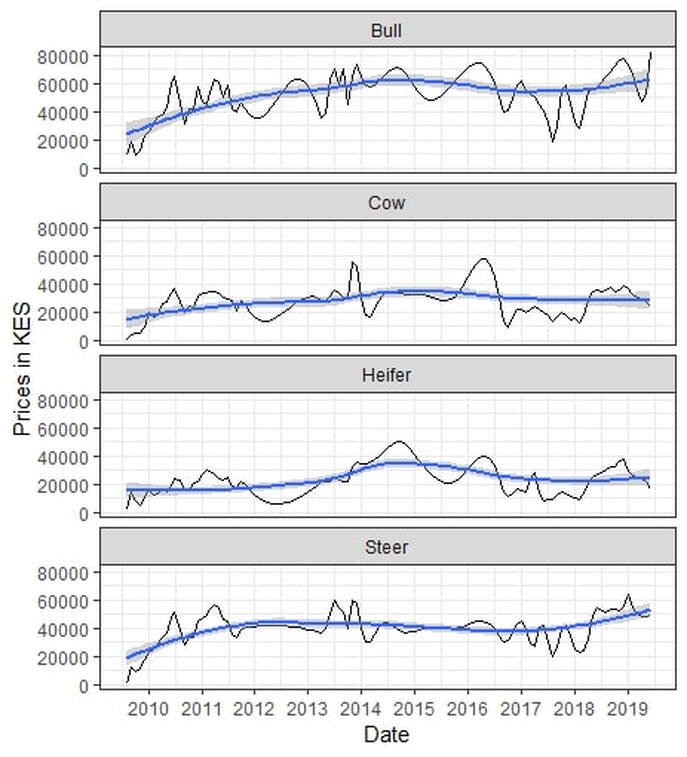
Figure 1: Average livestock market prices in eastern Kajiado showing a steady recovery after the 2009 drought and fluctuations with subsequent dry periods.

A calibration of livestock prices based on monthly  data collected in the ecosystem from 2009 to 2019 shows that  the  average prices for bulls in 2009 were in the red (Figure 2) falling 80.1 percent below the maximum expected market price. The market recovered steadily up to  2014 with arrival of widespread rainfall  and oscillated with seasonality thereafter.
The early warning model can guide herders on when to sell off their livestock  based on forage conditions and market forces, while estimating economic losses  due to extreme drought.
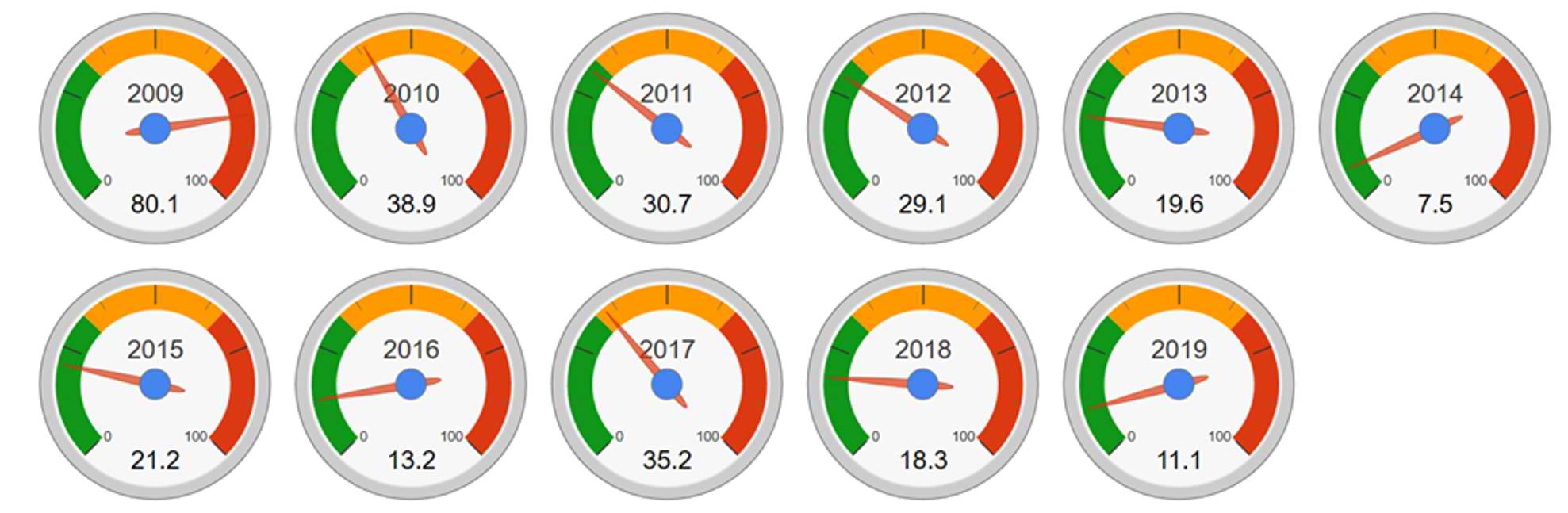
Figure 2: Price gauges showing average bull price index in percentages below the maximum price ever recorded. The prices, in the red during the 2009 drought, fell 80 percent below the maximum before recovering steadily up to 2014.
Figure 3: Annual variations of the livestock prices from 2009 to 2019.

By David (Jonah) Western

October 16, 2026

Six decades on from studying the ecology of Amboseli, I wrote in We Alone. How Humans Have Conquered the Planet.

By David (Jonah) Western

October 6, 2026

Last week saw the worst fires in years envelop Kilimanjaro.

By David (Jonah) Western

September 25, 2026

The extensive flooding in March of 2026 caused the closure of the Amboseli airstrip.

An analysis of livestock price fluctuations with droughts in eastern Kajiado

Authored by : Victor N. Mose, David Western and the ACP team
Posted on January 31, 2020

The livestock market in eastern Kajiado has steadily recovered after the near collapse in 2009 owing to the debilitating drought that led to losses of cattle, sheep, goats and donkeys. Prices fell below 1,000 Kenya shillings for a bull too weak to walk and surged to 90,000 Kenya shillings with the drought breaks (Figure 1). Amboseli Conservation Program monitors  livestock  market prices  on a monthly basis and is in the process of modelling economic losses due to droughts and the gains when herders sell off their livestock early enough before  periods of extreme  forage shortfall.

Figure 1: Average livestock market prices in eastern Kajiado showing a steady recovery after the 2009 drought and fluctuations with subsequent dry periods.

A calibration of livestock prices based on monthly  data collected in the ecosystem from 2009 to 2019 shows that  the  average prices for bulls in 2009 were in the red (Figure 2) falling 80.1 percent below the maximum expected market price. The market recovered steadily up to  2014 with arrival of widespread rainfall  and oscillated with seasonality thereafter.
The early warning model can guide herders on when to sell off their livestock  based on forage conditions and market forces, while estimating economic losses  due to extreme drought.
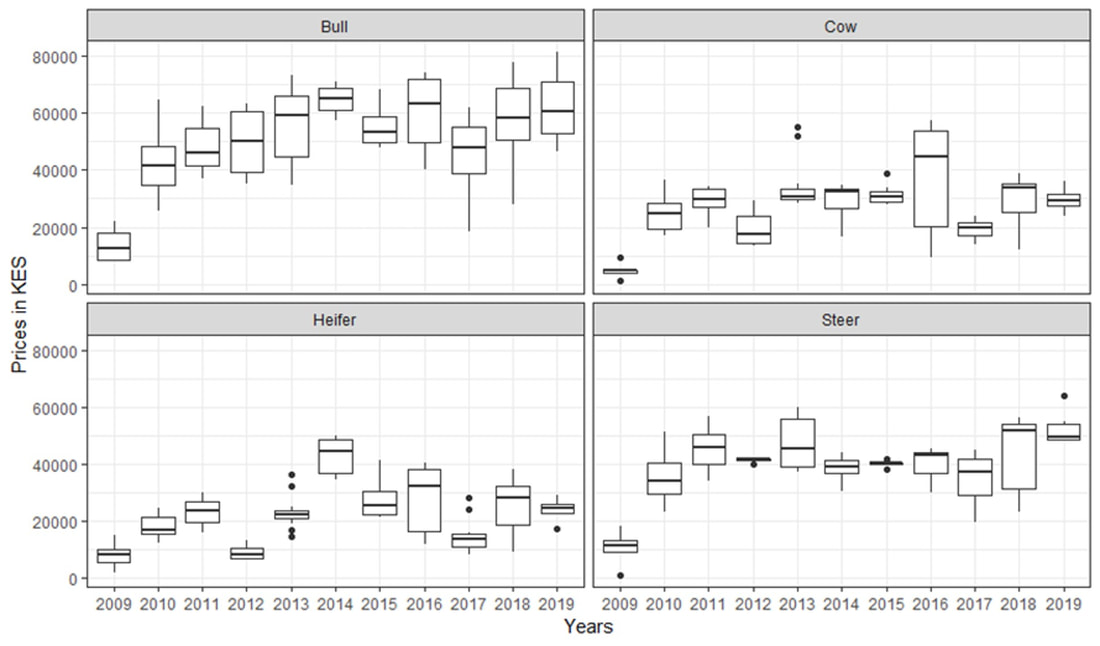
Figure 2: Price gauges showing average bull price index in percentages below the maximum price ever recorded. The prices, in the red during the 2009 drought, fell 80 percent below the maximum before recovering steadily up to 2014.
Figure 3: Annual variations of the livestock prices from 2009 to 2019.

By Victor N. Mose, David Western and the ACP team

The livestock market in eastern Kajiado has steadily recovered after the near collapse in 2009 owing to the debilitating drought that led to losses of cattle, sheep, goats and donkeys. Prices fell below 1,000 Kenya shillings for a bull too weak to walk and surged to 90,000 Kenya shillings with the drought breaks (Figure 1). Amboseli Conservation Program monitors  livestock  market prices  on a monthly basis and is in the process of modelling economic losses due to droughts and the gains when herders sell off their livestock early enough before  periods of extreme  forage shortfall.

Figure 1: Average livestock market prices in eastern Kajiado showing a steady recovery after the 2009 drought and fluctuations with subsequent dry periods.

A calibration of livestock prices based on monthly  data collected in the ecosystem from 2009 to 2019 shows that  the  average prices for bulls in 2009 were in the red (Figure 2) falling 80.1 percent below the maximum expected market price. The market recovered steadily up to  2014 with arrival of widespread rainfall  and oscillated with seasonality thereafter.
The early warning model can guide herders on when to sell off their livestock  based on forage conditions and market forces, while estimating economic losses  due to extreme drought.

Figure 2: Price gauges showing average bull price index in percentages below the maximum price ever recorded. The prices, in the red during the 2009 drought, fell 80 percent below the maximum before recovering steadily up to 2014.
Figure 3: Annual variations of the livestock prices from 2009 to 2019.

By David (Jonah) Western

October 16, 2026

Six decades on from studying the ecology of Amboseli, I wrote in We Alone. How Humans Have Conquered the Planet.

By David (Jonah) Western

October 6, 2026

Last week saw the worst fires in years envelop Kilimanjaro.

By David (Jonah) Western

September 25, 2026

The extensive flooding in March of 2026 caused the closure of the Amboseli airstrip.

Posted on January 31, 2020

By Victor N. Mose, David Western and the ACP team

The livestock market in eastern Kajiado has steadily recovered after the near collapse in 2009 owing to the debilitating drought that led to losses of cattle, sheep, goats and donkeys. Prices fell below 1,000 Kenya shillings for a bull too weak to walk and surged to 90,000 Kenya shillings with the drought breaks (Figure 1). Amboseli Conservation Program monitors  livestock  market prices  on a monthly basis and is in the process of modelling economic losses due to droughts and the gains when herders sell off their livestock early enough before  periods of extreme  forage shortfall.

Figure 1: Average livestock market prices in eastern Kajiado showing a steady recovery after the 2009 drought and fluctuations with subsequent dry periods.

A calibration of livestock prices based on monthly  data collected in the ecosystem from 2009 to 2019 shows that  the  average prices for bulls in 2009 were in the red (Figure 2) falling 80.1 percent below the maximum expected market price. The market recovered steadily up to  2014 with arrival of widespread rainfall  and oscillated with seasonality thereafter.
The early warning model can guide herders on when to sell off their livestock  based on forage conditions and market forces, while estimating economic losses  due to extreme drought.

Figure 2: Price gauges showing average bull price index in percentages below the maximum price ever recorded. The prices, in the red during the 2009 drought, fell 80 percent below the maximum before recovering steadily up to 2014.
Figure 3: Annual variations of the livestock prices from 2009 to 2019.

Recent Posts

By David (Jonah) Western

October 28, 2026

Ecotourism Kenya celebrated its 30th anniversary at festive gala held at the Hyatt Regency on 16th of October.

By David (Jonah) Western

October 16, 2026

Six decades on from studying the ecology of Amboseli, I wrote in We Alone. How Humans Have Conquered the Planet.

By David (Jonah) Western

October 6, 2026

Last week saw the worst fires in years envelop Kilimanjaro.

By David (Jonah) Western

September 25, 2026

The extensive flooding in March of 2026 caused the closure of the Amboseli airstrip.

By Victor N. Mose

September 23, 2026

Herders from Amboseli, who are members of a community visited JKUAT.

By Jonah Western

August 17, 2026

The deaths of two more elephants in the Amboseli area last week bring the total to 19, further fueling speculation

By Victor N. Mose

August 10, 2026

Amboseli Conservation Program (ACP) statisticians this week took Bayesian inference back 1 million years.

By Dr. David Jonah Western

August 5, 2026

Sixteen elephants have died in Amboseli in just a few weeks, alarming conservationists and the Maasai community

By David Western, Victor N. Mose*, David Maitumo, Winfridah Kemunto, Sakimba Kimiti, Immaculate Ombongi, Samuel Lekanaiya, Paul Kasaine and Sunte Kimiti

July 31, 2026

The latest Amboseli Ecosystem Outlook Report combines perspectives from local herders and livestock traders

By Victor N. Mose

July 22, 2026

Fireworks displaying EU–Kenya relations rocked the skyline in Loresho at Shamba Café, lighting up the evening sky

Contact Us

Amboseli Conservation Program
P.O Box 15289-00509 or 62844-00200
Nairobi, Kenya.

Tel/Fax: +254 20 891360 / 891751
Email: acc@acc.or.ke