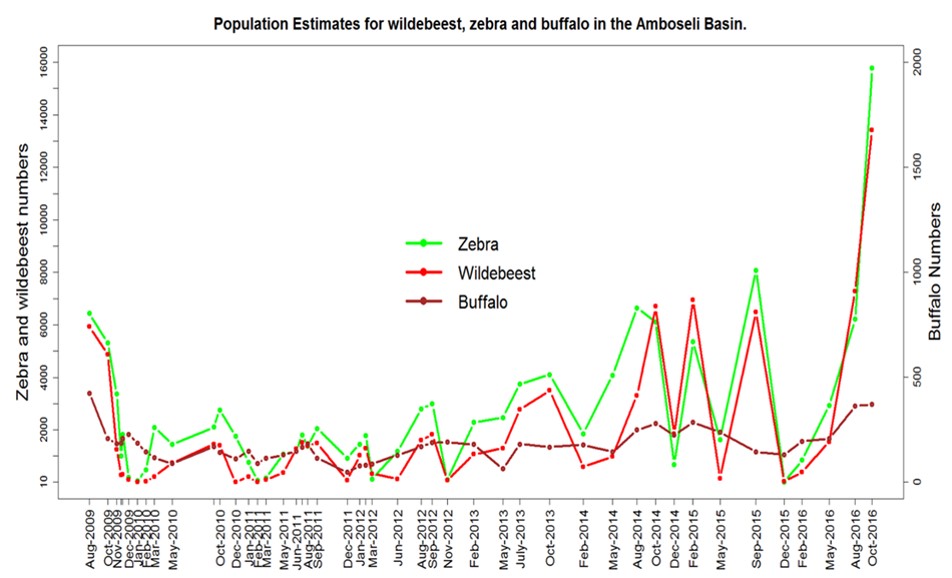
Wildlife numbers in Amboseli continue their recovery from the 2009 drought. The influx of zebra and wildebeest into the Amboseli basin in October doubled the numbers counted in August. This is good news for Amboseli and, along with Maaasai Mara, has restored the national park to the top league of wildlife viewing in Kenya. I have not seen such spectacular concentrations of zebra, wildebeest and gazelle around the swamps since the 1990s.
The increase reflect a continuing recovery of herbivores from the 2009 drought in which wildebeest numbers plunged by over 90 percent, zebra by two thirds and buffalo by slightly more. Zebra numbers have recovered their pre-drought levels of 16,000 but are still below their peak numbers in the 1990s. Wildebeest figures have risen to two thirds of their pre-drought levels and buffalo are approaching the same recovery.
The big influx into Amboseli in October also reflects the severity of conditions across the larger ecosystem, as reported in the July posting. With livestock at peak numbers and the long rains falling short in the Chyulus and Mbirikani, Kuku and Rombo Group Ranches to the West, pasture is at its lowest ebb since the 2009 drought. The upshot is a large influx of wildebeest, zebra and livestock that would otherwise retreat to the dry season pastures along the base of the Chyulu Hills. Since July, I have counted the largest numbers of cattle, sheep and goat in Amboseli in many years.
The recovery of wildlife and livestock herds poses big problems that need urgent attention to avoid a repeat of the 2009 drought. The pressure on the pasture is showing up in the monthly grassland plots we monitor across the ecosystem. Grazing pressure has severely depleted the late dry season reserves. Pasture recovery is falling sharply in the rains. The body condition and milk yields of cattle has dropped steeply, making life harder for pastoralists. Herders are pushing their animals deep into the Chyulu Hills, Tsavo West and Amboseli National Parks in search of grazing, causing a growing conflict with Kenya Wildlife Service rangers. Elephants running short of late season forage in the park are spreading out of the park and running up conflict with herders and farmers. The intense grazing and browsing pressure in Amboseli National Park is continuing to deplete woody vegetation and biodiversity. A renewed push to build a cement factory between Amboseli and Mbirikani/Chyulu Hills poses a severe threat to the migratory route connecting the two pivotal portions of the ecosystem.
Wildlife numbers in Amboseli continue their recovery from the 2009 drought. The influx of zebra and wildebeest into the Amboseli basin in October doubled the numbers counted in August. This is good news for Amboseli and, along with Maaasai Mara, has restored the national park to the top league of wildlife viewing in Kenya. I have not seen such spectacular concentrations of zebra, wildebeest and gazelle around the swamps since the 1990s.
The increase reflect a continuing recovery of herbivores from the 2009 drought in which wildebeest numbers plunged by over 90 percent, zebra by two thirds and buffalo by slightly more. Zebra numbers have recovered their pre-drought levels of 16,000 but are still below their peak numbers in the 1990s. Wildebeest figures have risen to two thirds of their pre-drought levels and buffalo are approaching the same recovery.
The big influx into Amboseli in October also reflects the severity of conditions across the larger ecosystem, as reported in the July posting. With livestock at peak numbers and the long rains falling short in the Chyulus and Mbirikani, Kuku and Rombo Group Ranches to the West, pasture is at its lowest ebb since the 2009 drought. The upshot is a large influx of wildebeest, zebra and livestock that would otherwise retreat to the dry season pastures along the base of the Chyulu Hills. Since July, I have counted the largest numbers of cattle, sheep and goat in Amboseli in many years.
The recovery of wildlife and livestock herds poses big problems that need urgent attention to avoid a repeat of the 2009 drought. The pressure on the pasture is showing up in the monthly grassland plots we monitor across the ecosystem. Grazing pressure has severely depleted the late dry season reserves. Pasture recovery is falling sharply in the rains. The body condition and milk yields of cattle has dropped steeply, making life harder for pastoralists. Herders are pushing their animals deep into the Chyulu Hills, Tsavo West and Amboseli National Parks in search of grazing, causing a growing conflict with Kenya Wildlife Service rangers. Elephants running short of late season forage in the park are spreading out of the park and running up conflict with herders and farmers. The intense grazing and browsing pressure in Amboseli National Park is continuing to deplete woody vegetation and biodiversity. A renewed push to build a cement factory between Amboseli and Mbirikani/Chyulu Hills poses a severe threat to the migratory route connecting the two pivotal portions of the ecosystem.
Wildlife numbers in Amboseli continue their recovery from the 2009 drought. The influx of zebra and wildebeest into the Amboseli basin in October doubled the numbers counted in August. This is good news for Amboseli and, along with Maaasai Mara, has restored the national park to the top league of wildlife viewing in Kenya. I have not seen such spectacular concentrations of zebra, wildebeest and gazelle around the swamps since the 1990s.
The increase reflect a continuing recovery of herbivores from the 2009 drought in which wildebeest numbers plunged by over 90 percent, zebra by two thirds and buffalo by slightly more. Zebra numbers have recovered their pre-drought levels of 16,000 but are still below their peak numbers in the 1990s. Wildebeest figures have risen to two thirds of their pre-drought levels and buffalo are approaching the same recovery.
The big influx into Amboseli in October also reflects the severity of conditions across the larger ecosystem, as reported in the July posting. With livestock at peak numbers and the long rains falling short in the Chyulus and Mbirikani, Kuku and Rombo Group Ranches to the West, pasture is at its lowest ebb since the 2009 drought. The upshot is a large influx of wildebeest, zebra and livestock that would otherwise retreat to the dry season pastures along the base of the Chyulu Hills. Since July, I have counted the largest numbers of cattle, sheep and goat in Amboseli in many years.
The recovery of wildlife and livestock herds poses big problems that need urgent attention to avoid a repeat of the 2009 drought. The pressure on the pasture is showing up in the monthly grassland plots we monitor across the ecosystem. Grazing pressure has severely depleted the late dry season reserves. Pasture recovery is falling sharply in the rains. The body condition and milk yields of cattle has dropped steeply, making life harder for pastoralists. Herders are pushing their animals deep into the Chyulu Hills, Tsavo West and Amboseli National Parks in search of grazing, causing a growing conflict with Kenya Wildlife Service rangers. Elephants running short of late season forage in the park are spreading out of the park and running up conflict with herders and farmers. The intense grazing and browsing pressure in Amboseli National Park is continuing to deplete woody vegetation and biodiversity. A renewed push to build a cement factory between Amboseli and Mbirikani/Chyulu Hills poses a severe threat to the migratory route connecting the two pivotal portions of the ecosystem.
Wildlife numbers in Amboseli continue their recovery from the 2009 drought. The influx of zebra and wildebeest into the Amboseli basin in October doubled the numbers counted in August. This is good news for Amboseli and, along with Maaasai Mara, has restored the national park to the top league of wildlife viewing in Kenya. I have not seen such spectacular concentrations of zebra, wildebeest and gazelle around the swamps since the 1990s.
The increase reflect a continuing recovery of herbivores from the 2009 drought in which wildebeest numbers plunged by over 90 percent, zebra by two thirds and buffalo by slightly more. Zebra numbers have recovered their pre-drought levels of 16,000 but are still below their peak numbers in the 1990s. Wildebeest figures have risen to two thirds of their pre-drought levels and buffalo are approaching the same recovery.
The big influx into Amboseli in October also reflects the severity of conditions across the larger ecosystem, as reported in the July posting. With livestock at peak numbers and the long rains falling short in the Chyulus and Mbirikani, Kuku and Rombo Group Ranches to the West, pasture is at its lowest ebb since the 2009 drought. The upshot is a large influx of wildebeest, zebra and livestock that would otherwise retreat to the dry season pastures along the base of the Chyulu Hills. Since July, I have counted the largest numbers of cattle, sheep and goat in Amboseli in many years.
The recovery of wildlife and livestock herds poses big problems that need urgent attention to avoid a repeat of the 2009 drought. The pressure on the pasture is showing up in the monthly grassland plots we monitor across the ecosystem. Grazing pressure has severely depleted the late dry season reserves. Pasture recovery is falling sharply in the rains. The body condition and milk yields of cattle has dropped steeply, making life harder for pastoralists. Herders are pushing their animals deep into the Chyulu Hills, Tsavo West and Amboseli National Parks in search of grazing, causing a growing conflict with Kenya Wildlife Service rangers. Elephants running short of late season forage in the park are spreading out of the park and running up conflict with herders and farmers. The intense grazing and browsing pressure in Amboseli National Park is continuing to deplete woody vegetation and biodiversity. A renewed push to build a cement factory between Amboseli and Mbirikani/Chyulu Hills poses a severe threat to the migratory route connecting the two pivotal portions of the ecosystem.