Protected areas have committed over 15 percent of Earth’s lands to the conservation of wildlife. But these are too small and isolated to protect most biodiversity or curtail species losses. In recent decades recognition of these limitations has spurred new ways to buffer parks and safeguard biodiversity by conserving wildlife in human-dominated landscapes. Moving beyond protected areas calls for realigning conservation paradigms to ensure the lives of rural people are improved and their lands conserved.
In our Review & Synthesis article published in People and Nature, we use a case study from the rangelands of Southern Kenya, to explore how large migratory herds of wildlife which have coexisted with pastoralists for millennia can be sustained by fusing traditional husbandry practices with contemporary governance institutions and conservation policies.
We show how herding families, using the traditional notion of erematare which links the welfare of the family to the productivity of the herd sustained by free-ranging movements across large open landscapes, indirectly conserve wildlife. The value of wildlife as second cattle during droughts is captured by the Maasai saying: “we protected wildlife from hunters, and wildlife protected us from drought. Coexistence is the essence of survival for us both.”
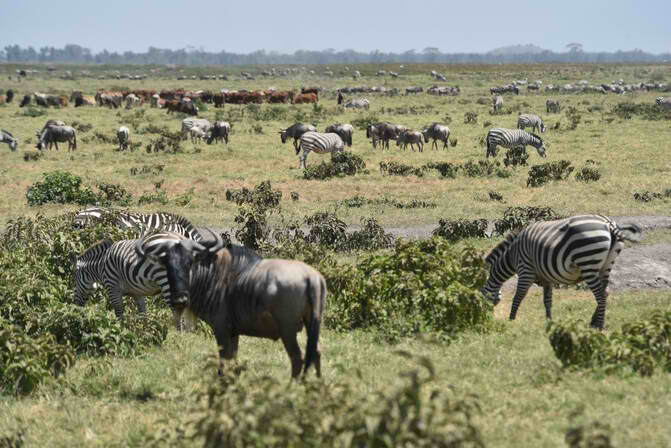
The erematare linkages between the family, their herds, and their mobility in response to forage availability, disease and other hazards, maximize livestock productivity, minimizes drought exposure and facilitates the coexistence with wildlife. The large open landscapes which underlie the success of pastoral economies are intimately linked to an extensive network of associates and governance procedures among herders based on social reciprocity.
The large open landscapes sustaining pastoral herds and wildlife and their coexistence are facing increases threats across the savannas from land subdivision, sedentarization of herders, and rangeland degradation. We show that the traditional social and ecological linkages embodied in erematare incorporated into contemporary institutions and collective governance procedures can sustain large open landscapes and, in the process, conserve wildlife, pasture, water and natural habitats.
We show that an emerging blend of traditional and contemporary governance institutions can improve family income through livestock and range management and wildlife enterprises. The creation of landowners’ associations focusing on livestock and linked across the landscape to secure mobility, in the face of subdivision and alienation, indirectly conserve regional biodiversity, and the large free-ranging herbivore and carnivore populations support the economy of the region. The large open landscapes and conservation of habitats also sustains ecosystem functions and services. The “inside-out” approach we highlight reverses the top-down outside interventionist approaches that have typified wildlife protection. Based on self-interest in improving livelihoods, securing access to large open landscapes and diversifying incomes through wildlife enterprises and natural capital, the inside-out approach has the potential to buffer protected areas and open up large additional landscapes for wildlife in the rangelands, indigenous forest management, and marine fisheries.
Protected areas have committed over 15 percent of Earth’s lands to the conservation of wildlife. But these are too small and isolated to protect most biodiversity or curtail species losses. In recent decades recognition of these limitations has spurred new ways to buffer parks and safeguard biodiversity by conserving wildlife in human-dominated landscapes. Moving beyond protected areas calls for realigning conservation paradigms to ensure the lives of rural people are improved and their lands conserved.
In our Review & Synthesis article published in People and Nature, we use a case study from the rangelands of Southern Kenya, to explore how large migratory herds of wildlife which have coexisted with pastoralists for millennia can be sustained by fusing traditional husbandry practices with contemporary governance institutions and conservation policies.
We show how herding families, using the traditional notion of erematare which links the welfare of the family to the productivity of the herd sustained by free-ranging movements across large open landscapes, indirectly conserve wildlife. The value of wildlife as second cattle during droughts is captured by the Maasai saying: “we protected wildlife from hunters, and wildlife protected us from drought. Coexistence is the essence of survival for us both.”
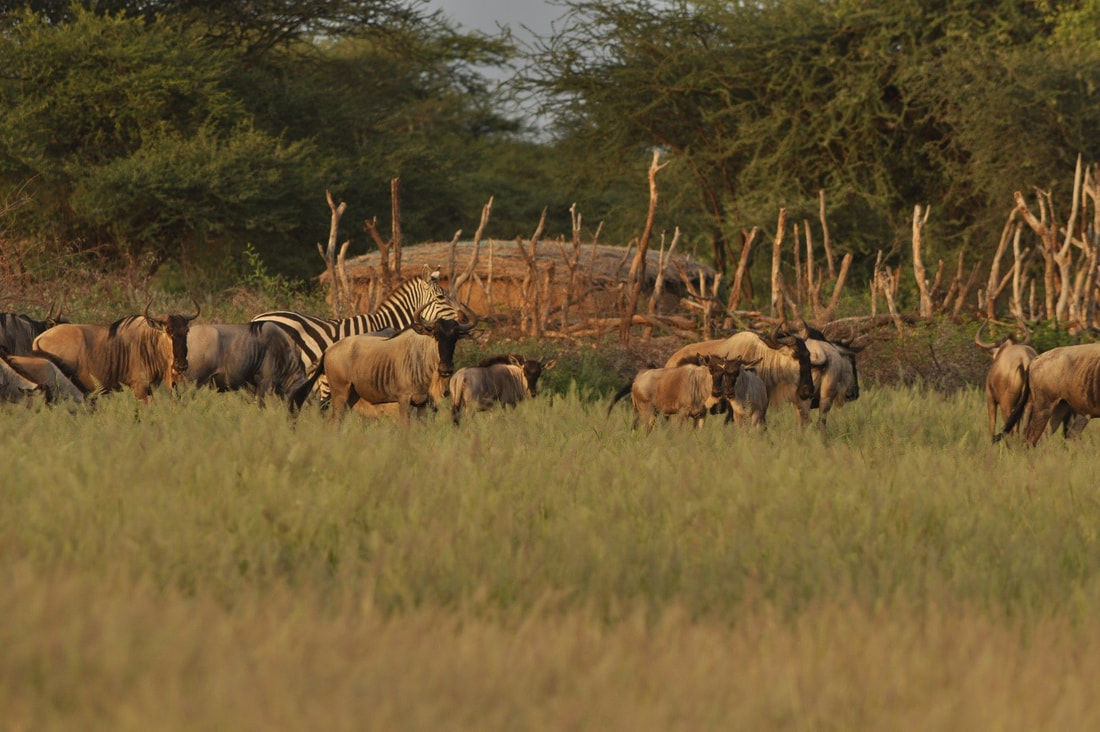
The erematare linkages between the family, their herds, and their mobility in response to forage availability, disease and other hazards, maximize livestock productivity, minimizes drought exposure and facilitates the coexistence with wildlife. The large open landscapes which underlie the success of pastoral economies are intimately linked to an extensive network of associates and governance procedures among herders based on social reciprocity.
The large open landscapes sustaining pastoral herds and wildlife and their coexistence are facing increases threats across the savannas from land subdivision, sedentarization of herders, and rangeland degradation. We show that the traditional social and ecological linkages embodied in erematare incorporated into contemporary institutions and collective governance procedures can sustain large open landscapes and, in the process, conserve wildlife, pasture, water and natural habitats.
We show that an emerging blend of traditional and contemporary governance institutions can improve family income through livestock and range management and wildlife enterprises. The creation of landowners’ associations focusing on livestock and linked across the landscape to secure mobility, in the face of subdivision and alienation, indirectly conserve regional biodiversity, and the large free-ranging herbivore and carnivore populations support the economy of the region. The large open landscapes and conservation of habitats also sustains ecosystem functions and services. The “inside-out” approach we highlight reverses the top-down outside interventionist approaches that have typified wildlife protection. Based on self-interest in improving livelihoods, securing access to large open landscapes and diversifying incomes through wildlife enterprises and natural capital, the inside-out approach has the potential to buffer protected areas and open up large additional landscapes for wildlife in the rangelands, indigenous forest management, and marine fisheries.
Protected areas have committed over 15 percent of Earth’s lands to the conservation of wildlife. But these are too small and isolated to protect most biodiversity or curtail species losses. In recent decades recognition of these limitations has spurred new ways to buffer parks and safeguard biodiversity by conserving wildlife in human-dominated landscapes. Moving beyond protected areas calls for realigning conservation paradigms to ensure the lives of rural people are improved and their lands conserved.
In our Review & Synthesis article published in People and Nature, we use a case study from the rangelands of Southern Kenya, to explore how large migratory herds of wildlife which have coexisted with pastoralists for millennia can be sustained by fusing traditional husbandry practices with contemporary governance institutions and conservation policies.
We show how herding families, using the traditional notion of erematare which links the welfare of the family to the productivity of the herd sustained by free-ranging movements across large open landscapes, indirectly conserve wildlife. The value of wildlife as second cattle during droughts is captured by the Maasai saying: “we protected wildlife from hunters, and wildlife protected us from drought. Coexistence is the essence of survival for us both.”
The erematare linkages between the family, their herds, and their mobility in response to forage availability, disease and other hazards, maximize livestock productivity, minimizes drought exposure and facilitates the coexistence with wildlife. The large open landscapes which underlie the success of pastoral economies are intimately linked to an extensive network of associates and governance procedures among herders based on social reciprocity.
The large open landscapes sustaining pastoral herds and wildlife and their coexistence are facing increases threats across the savannas from land subdivision, sedentarization of herders, and rangeland degradation. We show that the traditional social and ecological linkages embodied in erematare incorporated into contemporary institutions and collective governance procedures can sustain large open landscapes and, in the process, conserve wildlife, pasture, water and natural habitats.
We show that an emerging blend of traditional and contemporary governance institutions can improve family income through livestock and range management and wildlife enterprises. The creation of landowners’ associations focusing on livestock and linked across the landscape to secure mobility, in the face of subdivision and alienation, indirectly conserve regional biodiversity, and the large free-ranging herbivore and carnivore populations support the economy of the region. The large open landscapes and conservation of habitats also sustains ecosystem functions and services. The “inside-out” approach we highlight reverses the top-down outside interventionist approaches that have typified wildlife protection. Based on self-interest in improving livelihoods, securing access to large open landscapes and diversifying incomes through wildlife enterprises and natural capital, the inside-out approach has the potential to buffer protected areas and open up large additional landscapes for wildlife in the rangelands, indigenous forest management, and marine fisheries.
Protected areas have committed over 15 percent of Earth’s lands to the conservation of wildlife. But these are too small and isolated to protect most biodiversity or curtail species losses. In recent decades recognition of these limitations has spurred new ways to buffer parks and safeguard biodiversity by conserving wildlife in human-dominated landscapes. Moving beyond protected areas calls for realigning conservation paradigms to ensure the lives of rural people are improved and their lands conserved.
In our Review & Synthesis article published in People and Nature, we use a case study from the rangelands of Southern Kenya, to explore how large migratory herds of wildlife which have coexisted with pastoralists for millennia can be sustained by fusing traditional husbandry practices with contemporary governance institutions and conservation policies.
We show how herding families, using the traditional notion of erematare which links the welfare of the family to the productivity of the herd sustained by free-ranging movements across large open landscapes, indirectly conserve wildlife. The value of wildlife as second cattle during droughts is captured by the Maasai saying: “we protected wildlife from hunters, and wildlife protected us from drought. Coexistence is the essence of survival for us both.”
The erematare linkages between the family, their herds, and their mobility in response to forage availability, disease and other hazards, maximize livestock productivity, minimizes drought exposure and facilitates the coexistence with wildlife. The large open landscapes which underlie the success of pastoral economies are intimately linked to an extensive network of associates and governance procedures among herders based on social reciprocity.
The large open landscapes sustaining pastoral herds and wildlife and their coexistence are facing increases threats across the savannas from land subdivision, sedentarization of herders, and rangeland degradation. We show that the traditional social and ecological linkages embodied in erematare incorporated into contemporary institutions and collective governance procedures can sustain large open landscapes and, in the process, conserve wildlife, pasture, water and natural habitats.
We show that an emerging blend of traditional and contemporary governance institutions can improve family income through livestock and range management and wildlife enterprises. The creation of landowners’ associations focusing on livestock and linked across the landscape to secure mobility, in the face of subdivision and alienation, indirectly conserve regional biodiversity, and the large free-ranging herbivore and carnivore populations support the economy of the region. The large open landscapes and conservation of habitats also sustains ecosystem functions and services. The “inside-out” approach we highlight reverses the top-down outside interventionist approaches that have typified wildlife protection. Based on self-interest in improving livelihoods, securing access to large open landscapes and diversifying incomes through wildlife enterprises and natural capital, the inside-out approach has the potential to buffer protected areas and open up large additional landscapes for wildlife in the rangelands, indigenous forest management, and marine fisheries.