Introduction
The severe drought of early 2022 to February 2023 in the Amboseli ecosystem took a heavy toll on the herds and livelihoods of herders. The large number of livestock deaths and the heavy expenses incurred in managing herds during the drought highlights the urgent need for a comprehensive assessment of the viability of livestock production in the region. Despite the growing economic losses, herders, government and non-government agencies have had challenges in evaluating the losses, making it difficult to make informed decisions for improved livestock management and development.
The lack of accurate information has led to an undervaluation of traditional livestock production systems. The undervaluation has, in turn, resulted in poor government and development agency support for the pastoral area. The recurrent widespread droughts and heavy livestock mortality calls for a thorough valuation of the economic costs of keeping animals alive, and the economic value and cultural significance of doing so.
Detailed information on the economic costs of drought will help herders, government and development agencies take stock of the impact and causes of drought and mitigating measures that can be taken. The information also raises questions about whether the economic costs of drought are justifiable in the face of rangelands subdivision, degradation and climate change.
To gain insights into the impact of the drought, I conducted small-scale surveys across the Amboseli ecosystem in late October 2023, shortly before the start of the short rains.
The information collected included expenses incurred in purchasing hay, maize stalks, livestock supplements, including maizemeal (unga), livestock drugs, vaccines, acaricides, transporting livestock, leasing grazing land, and other drought-related costs. The data were broken down by month to track the time course of livestock deaths, sales, costs and value of the remaining herd.
Traditional livestock practices involving free-ranging livestock movements across shared grass and water sources are essential to the cultural fabric of pastoralists in the Amboseli ecosystem, and in sustaining wildlife herds.
Ignoring the collective use and management of pastures undervalues the cultural significance of livestock, leading to a lack of policy support for maintaining the productivity and resilience of pastoral land, to small-scale subdivision, and pasture degradation. I have, for this reason included cultural values in my survey.
Download the full report below.
The economic viability and cultural significance of
livestock post 2022-2023 drought. Insights from the
Amboseli ecosystem
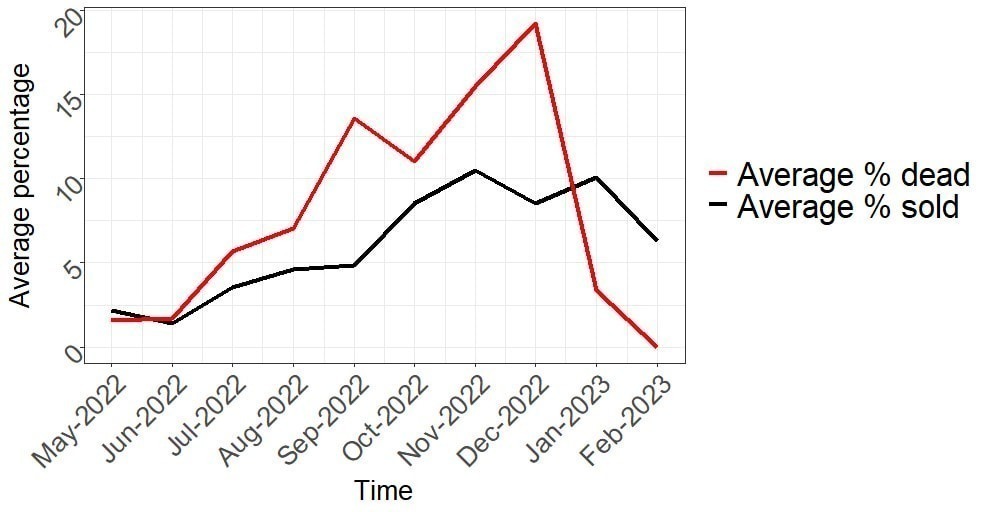
The average number of livestock sold against the number of animals dying of starvation over the course of the drought. The losses to drought are twice the numbers sold until animal condition begins to recover with the short rains in late 2022.
Introduction
The severe drought of early 2022 to February 2023 in the Amboseli ecosystem took a heavy toll on the herds and livelihoods of herders. The large number of livestock deaths and the heavy expenses incurred in managing herds during the drought highlights the urgent need for a comprehensive assessment of the viability of livestock production in the region. Despite the growing economic losses, herders, government and non-government agencies have had challenges in evaluating the losses, making it difficult to make informed decisions for improved livestock management and development.
The lack of accurate information has led to an undervaluation of traditional livestock production systems. The undervaluation has, in turn, resulted in poor government and development agency support for the pastoral area. The recurrent widespread droughts and heavy livestock mortality calls for a thorough valuation of the economic costs of keeping animals alive, and the economic value and cultural significance of doing so.
Detailed information on the economic costs of drought will help herders, government and development agencies take stock of the impact and causes of drought and mitigating measures that can be taken. The information also raises questions about whether the economic costs of drought are justifiable in the face of rangelands subdivision, degradation and climate change.
To gain insights into the impact of the drought, I conducted small-scale surveys across the Amboseli ecosystem in late October 2023, shortly before the start of the short rains.
The information collected included expenses incurred in purchasing hay, maize stalks, livestock supplements, including maizemeal (unga), livestock drugs, vaccines, acaricides, transporting livestock, leasing grazing land, and other drought-related costs. The data were broken down by month to track the time course of livestock deaths, sales, costs and value of the remaining herd.
Traditional livestock practices involving free-ranging livestock movements across shared grass and water sources are essential to the cultural fabric of pastoralists in the Amboseli ecosystem, and in sustaining wildlife herds.
Ignoring the collective use and management of pastures undervalues the cultural significance of livestock, leading to a lack of policy support for maintaining the productivity and resilience of pastoral land, to small-scale subdivision, and pasture degradation. I have, for this reason included cultural values in my survey.
Download the full report below.
The economic viability and cultural significance of
livestock post 2022-2023 drought. Insights from the
Amboseli ecosystem
The average number of livestock sold against the number of animals dying of starvation over the course of the drought. The losses to drought are twice the numbers sold until animal condition begins to recover with the short rains in late 2022.
Introduction
The severe drought of early 2022 to February 2023 in the Amboseli ecosystem took a heavy toll on the herds and livelihoods of herders. The large number of livestock deaths and the heavy expenses incurred in managing herds during the drought highlights the urgent need for a comprehensive assessment of the viability of livestock production in the region. Despite the growing economic losses, herders, government and non-government agencies have had challenges in evaluating the losses, making it difficult to make informed decisions for improved livestock management and development.
The lack of accurate information has led to an undervaluation of traditional livestock production systems. The undervaluation has, in turn, resulted in poor government and development agency support for the pastoral area. The recurrent widespread droughts and heavy livestock mortality calls for a thorough valuation of the economic costs of keeping animals alive, and the economic value and cultural significance of doing so.
Detailed information on the economic costs of drought will help herders, government and development agencies take stock of the impact and causes of drought and mitigating measures that can be taken. The information also raises questions about whether the economic costs of drought are justifiable in the face of rangelands subdivision, degradation and climate change.
To gain insights into the impact of the drought, I conducted small-scale surveys across the Amboseli ecosystem in late October 2023, shortly before the start of the short rains.
The information collected included expenses incurred in purchasing hay, maize stalks, livestock supplements, including maizemeal (unga), livestock drugs, vaccines, acaricides, transporting livestock, leasing grazing land, and other drought-related costs. The data were broken down by month to track the time course of livestock deaths, sales, costs and value of the remaining herd.
Traditional livestock practices involving free-ranging livestock movements across shared grass and water sources are essential to the cultural fabric of pastoralists in the Amboseli ecosystem, and in sustaining wildlife herds.
Ignoring the collective use and management of pastures undervalues the cultural significance of livestock, leading to a lack of policy support for maintaining the productivity and resilience of pastoral land, to small-scale subdivision, and pasture degradation. I have, for this reason included cultural values in my survey.
Download the full report below.
The economic viability and cultural significance of
livestock post 2022-2023 drought. Insights from the
Amboseli ecosystem
The average number of livestock sold against the number of animals dying of starvation over the course of the drought. The losses to drought are twice the numbers sold until animal condition begins to recover with the short rains in late 2022.
Introduction
The severe drought of early 2022 to February 2023 in the Amboseli ecosystem took a heavy toll on the herds and livelihoods of herders. The large number of livestock deaths and the heavy expenses incurred in managing herds during the drought highlights the urgent need for a comprehensive assessment of the viability of livestock production in the region. Despite the growing economic losses, herders, government and non-government agencies have had challenges in evaluating the losses, making it difficult to make informed decisions for improved livestock management and development.
The lack of accurate information has led to an undervaluation of traditional livestock production systems. The undervaluation has, in turn, resulted in poor government and development agency support for the pastoral area. The recurrent widespread droughts and heavy livestock mortality calls for a thorough valuation of the economic costs of keeping animals alive, and the economic value and cultural significance of doing so.
Detailed information on the economic costs of drought will help herders, government and development agencies take stock of the impact and causes of drought and mitigating measures that can be taken. The information also raises questions about whether the economic costs of drought are justifiable in the face of rangelands subdivision, degradation and climate change.
To gain insights into the impact of the drought, I conducted small-scale surveys across the Amboseli ecosystem in late October 2023, shortly before the start of the short rains.
The information collected included expenses incurred in purchasing hay, maize stalks, livestock supplements, including maizemeal (unga), livestock drugs, vaccines, acaricides, transporting livestock, leasing grazing land, and other drought-related costs. The data were broken down by month to track the time course of livestock deaths, sales, costs and value of the remaining herd.
Traditional livestock practices involving free-ranging livestock movements across shared grass and water sources are essential to the cultural fabric of pastoralists in the Amboseli ecosystem, and in sustaining wildlife herds.
Ignoring the collective use and management of pastures undervalues the cultural significance of livestock, leading to a lack of policy support for maintaining the productivity and resilience of pastoral land, to small-scale subdivision, and pasture degradation. I have, for this reason included cultural values in my survey.
Download the full report below.
The economic viability and cultural significance of
livestock post 2022-2023 drought. Insights from the
Amboseli ecosystem
The average number of livestock sold against the number of animals dying of starvation over the course of the drought. The losses to drought are twice the numbers sold until animal condition begins to recover with the short rains in late 2022.