
By David Western

Using exploratory data analysis to visualize and test hypothesis is fast becoming a method of choice for many researchers working across disciplines. Data visualization allows team members to work together in building ideas about how ecological systems work. Victor Mose outlined the benefits of this approach at the third annual International Biometric Society (IBS)–Kenya chapter held at the Strathmore University in Nairobi.

He used the long-term Amboseli data to show how spatial exploratory data analysis can reduce complex ecological hypothesis to simple visual presentations with cross-cutting research applications. The approach requires no prior knowledge about the data and can be rapidly applied to formulate and test hypothesis in visual  form with wide applications.
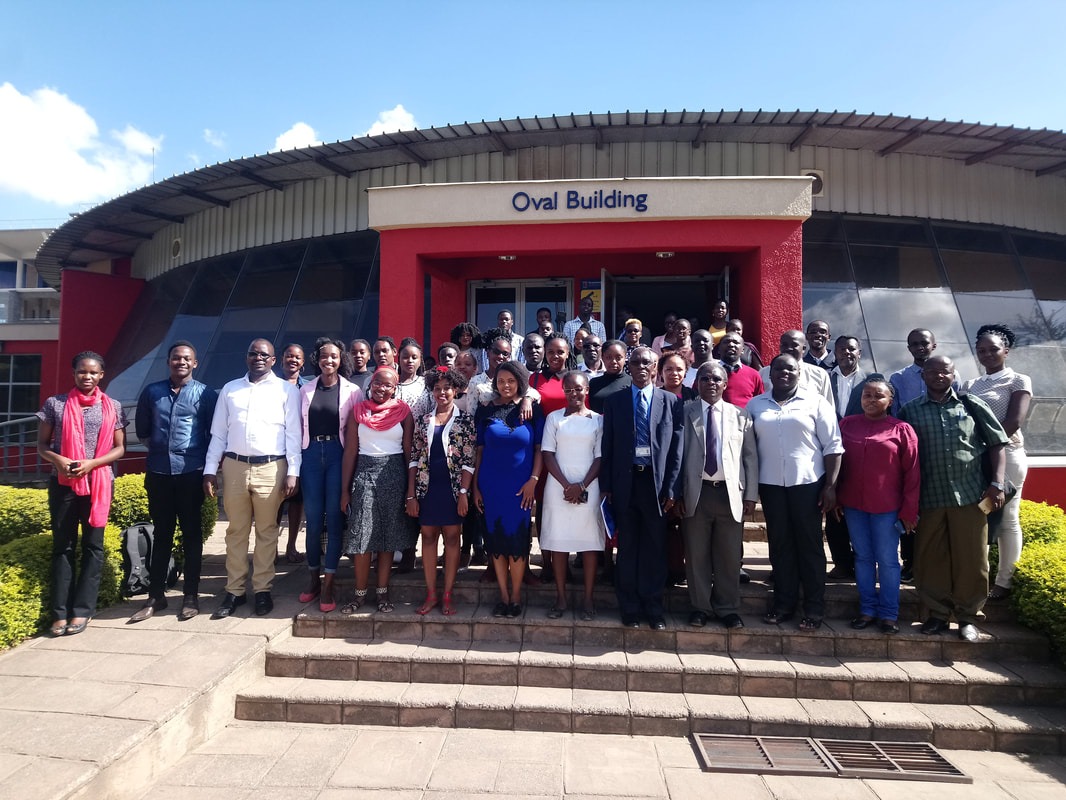
The vice chancellor of Strathmore University, Nairobi, Prof John Odhiambo (4th from right-front row) and other International Biometric Society (IBS)-Kenya Chapter members attending the meeting.

By Victor N. Mose

March 18, 2026

Project MOSAIC has launched community-driven One Health Clubs in Amboseli to strengthen local action on resources.

By David Western

February 25, 2026

The greatest wildlife spectacles on earth are the migrations of large mammals and birds.

By David Western

December 5, 2025

Short rains failed in Oct to Nov 2025 and heavy post-drought stocking pushed pastures from green to red.

The power of visualizing spatial and temporal data in developing and testing ecological hypothesis

Authored by : David Western
Posted on April 1, 2019

Using exploratory data analysis to visualize and test hypothesis is fast becoming a method of choice for many researchers working across disciplines. Data visualization allows team members to work together in building ideas about how ecological systems work. Victor Mose outlined the benefits of this approach at the third annual International Biometric Society (IBS)–Kenya chapter held at the Strathmore University in Nairobi.

He used the long-term Amboseli data to show how spatial exploratory data analysis can reduce complex ecological hypothesis to simple visual presentations with cross-cutting research applications. The approach requires no prior knowledge about the data and can be rapidly applied to formulate and test hypothesis in visual  form with wide applications.

The vice chancellor of Strathmore University, Nairobi, Prof John Odhiambo (4th from right-front row) and other International Biometric Society (IBS)-Kenya Chapter members attending the meeting.

By David Western

Using exploratory data analysis to visualize and test hypothesis is fast becoming a method of choice for many researchers working across disciplines. Data visualization allows team members to work together in building ideas about how ecological systems work. Victor Mose outlined the benefits of this approach at the third annual International Biometric Society (IBS)–Kenya chapter held at the Strathmore University in Nairobi.

He used the long-term Amboseli data to show how spatial exploratory data analysis can reduce complex ecological hypothesis to simple visual presentations with cross-cutting research applications. The approach requires no prior knowledge about the data and can be rapidly applied to formulate and test hypothesis in visual  form with wide applications.

The vice chancellor of Strathmore University, Nairobi, Prof John Odhiambo (4th from right-front row) and other International Biometric Society (IBS)-Kenya Chapter members attending the meeting.

By Victor N. Mose

March 18, 2026

Project MOSAIC has launched community-driven One Health Clubs in Amboseli to strengthen local action on resources.

By David Western

February 25, 2026

The greatest wildlife spectacles on earth are the migrations of large mammals and birds.

By David Western

December 5, 2025

Short rains failed in Oct to Nov 2025 and heavy post-drought stocking pushed pastures from green to red.

Posted on April 1, 2019

By David Western

Using exploratory data analysis to visualize and test hypothesis is fast becoming a method of choice for many researchers working across disciplines. Data visualization allows team members to work together in building ideas about how ecological systems work. Victor Mose outlined the benefits of this approach at the third annual International Biometric Society (IBS)–Kenya chapter held at the Strathmore University in Nairobi.

He used the long-term Amboseli data to show how spatial exploratory data analysis can reduce complex ecological hypothesis to simple visual presentations with cross-cutting research applications. The approach requires no prior knowledge about the data and can be rapidly applied to formulate and test hypothesis in visual  form with wide applications.

The vice chancellor of Strathmore University, Nairobi, Prof John Odhiambo (4th from right-front row) and other International Biometric Society (IBS)-Kenya Chapter members attending the meeting.

Recent Posts

By Victor N. Mose

April 4, 2026

The MOSAIC meeting in Montpellier focused on practical solutions for shared environmental and health challenges

By Victor N. Mose

March 18, 2026

Project MOSAIC has launched community-driven One Health Clubs in Amboseli to strengthen local action on resources.

By David Western

February 25, 2026

The greatest wildlife spectacles on earth are the migrations of large mammals and birds.

By David Western

December 5, 2025

Short rains failed in Oct to Nov 2025 and heavy post-drought stocking pushed pastures from green to red.

By David Western

November 27, 2025

The handing back of Amboseli National Park to Kajiado County management on 8th November 2025

By ACP Team

July 26, 2025

Our Amboseli Conservation Program Outlook Report gives the state of pastures, livestock, and wildlife health.

By Victor Mose

June 9, 2025

Horizontal learning, where local communities and scientists co-design research, remains a central pillar of Mosaic

By ACP Team

May 6, 2025

We are delighted to present the inaugural issue of Eseriani, a new magazine dedicated to exploring well-being

By David Western, David Maitumo, Victor N. Mose, Julius Muriuki and Glen P. Mitema

March 14, 2025

Amboseli became world renowned in the 1950s as the setting for Where No Vulture’s Fly

By David Western, Victor N. Mose, David Maitumo, Immaculate Ombongi, Sakimba Kimiti, Winfridah Kemunto, Samuel Lekanaiya, Paul Kasaine and Sunte Kimiti

February 7, 2025

The outlook for livestock and wildlife in the short dry season normally stretching from January to the long rains

Contact Us

Amboseli Conservation Program
P.O Box 15289-00509 or 62844-00200
Nairobi, Kenya.

Tel/Fax: +254 20 891360 / 891751
Email: acc@acc.or.ke